
Vinyl Skirting
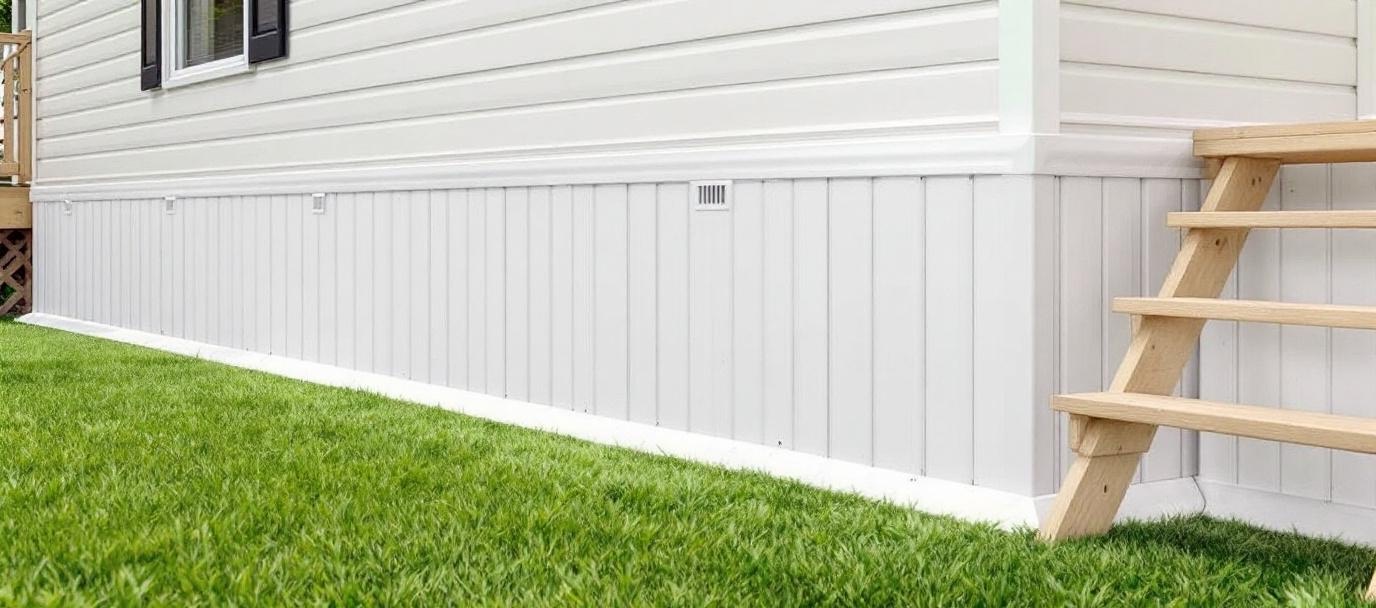
About Vinyl Skirting
Vinyl skirting closes the gap between the floor of a mobile home, mini home, cottage or raised deck and the ground, keeping wind, drifting snow and animals out of the space underneath without the upkeep of wooden lattice. Pro Materials stocks the two mobile home skirting panel systems Ontario contractors ask for: Mitten PleasantView, a horizontal triple-4" panel in Frost White, and Kaycan Vinyl Skirting, a vertical board panel in white.
Each is a five-piece system of front rail, back rail, bottom rail and solid and vented panels, every component in 12' lengths, and both are bent around corners rather than cut at them. An order is really two numbers, the panel count and the vent count, and our vinyl skirting sizing and venting guide works both of them through on a 14' x 70' home. Picked from stock in Newmarket for contractors, park operators and homeowners across York Region and Simcoe County.
Vinyl Skirting: At a Glance
2
Products
in this category
2
Brands
Kaycan, Mitten
Up to 1
Colour Options
per product line
Quote
Pricing
request for trade pricing
1 colour SKUs across 2 products
All colours available on a quote basis. Contact us for current stock and lead time.
Vinyl Skirting Buying Guide
Key factors to evaluate when specifying vinyl skirting for your project.
Solid and vented panels
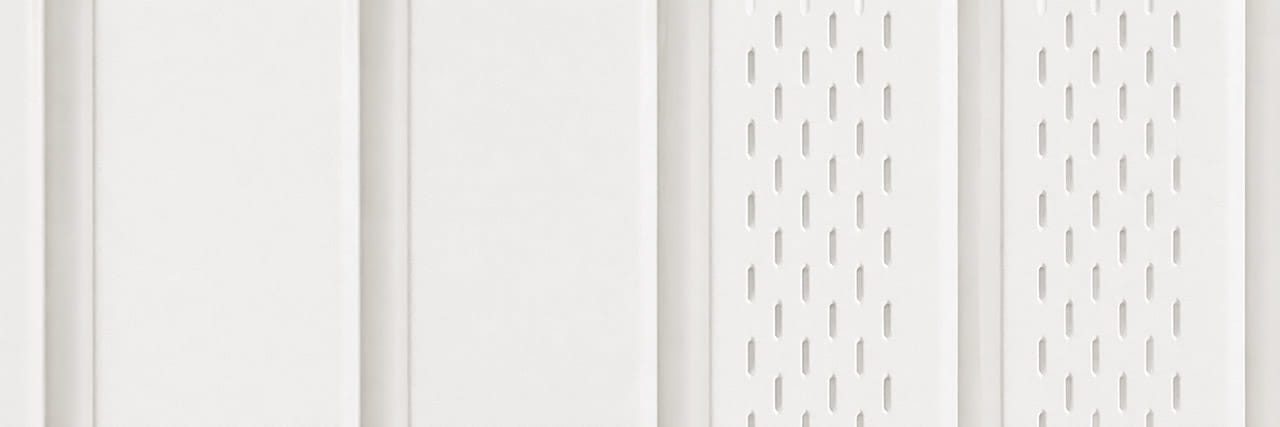
Both lines ship solid and vented panels in the same profile, and you intersperse them to get the airflow the structure needs. Vented panels carry perforations that move outside air under the floor; Mitten credits them with reducing moisture build-up and musty odours. Neither manufacturer publishes a net free vent area per panel, so a vent count taken off an ordering chart is a materials figure, not a compliance figure.
Horizontal or vertical
PleasantView is a triple-4" panel, 12" wide, laid horizontally in courses, so a 30" skirt is three courses and the piece count climbs in steps. Kaycan's board panel runs vertically and is cut to the skirt height on site, which suits a stepped or sloping grade where a horizontal course line would visibly step across the front of the building.
Measuring the height
Measure from the underside of the rim joist down to grade at the lowest corner of the home, never the highest. Mitten bands its ordering chart at 24", 26"-28", 30"-36" and 38"-48". Both manufacturers instruct you to cut each panel a quarter inch short of the measured gap so the vinyl has somewhere to expand on a hot afternoon.
Counting the order
Rails come out of the perimeter alone: one 12' piece per 12 feet, rounded up, for each of the front, back and bottom rail. A 14' x 70' home at 168 feet of perimeter takes 14 of each, at any height. Only the panel count moves with height, running from 28 pieces at a 24" skirt to 57 at 48".
Ventilation is a code number
Article 9.18.3.1 of the Ontario Building Code asks an unheated crawl space ventilated by natural means for not less than 0.1 m² of unobstructed vent area for every 50 m² of floor, which is one square foot of vent per 500 square feet, and for the vents to be uniformly distributed on opposite sides of the building. A heated crawl space is ventilated under Section 9.32 instead. Your municipal building department decides which applies.
What goes under the skirt
Article 9.18.6.1 wants a ground cover on an unheated crawl space: 50 mm of asphalt paving, 100 mm of 15 MPa concrete, Type S roll roofing, or 0.10 mm polyethylene with sheet joints lapped 100 mm and weighted down. Article 9.18.5.1 wants water ingress controlled by grading or drainage. Both are far cheaper to satisfy while the bottom rail is going in than to retrofit later.
Frequently Asked Questions
What is the difference between solid and vented vinyl skirting?
Solid panels are closed; vented panels carry perforations that let outside air move under the floor. You buy both and intersperse them, which is exactly how Kaycan's installation guide describes it. Vented panels belong on an unheated crawl space to move moisture out. Where the underfloor space is heated, it is ventilated through the house instead.
How much vinyl skirting do I need for a mobile home or mini home?
Rails come out of the perimeter and panels out of perimeter times height, whether the home is called a mobile home, a mini home or a single wide. A 14' x 70' single wide has a 168 foot perimeter, so it takes 14 twelve-foot pieces each of front rail, back rail and bottom rail at any height, plus 28 solid panels at a 24" skirt or 57 at 48". Send us the perimeter, the height at the lowest corner and the floor area and we will count it for you.
Does mobile home skirting have to be vented in Ontario?
An unheated crawl space does. Article 9.18.3.1 of the Ontario Building Code calls for at least 0.1 m² of unobstructed vent area per 50 m² of floor, which works out to one square foot per 500, uniformly distributed on opposite sides of the building. A factory-built home certified to the CSA Z240 MH series follows the setup instructions that travel with it, so confirm with your municipal building department which rule your structure falls under.
Can vinyl skirting be used on a deck or a cottage?
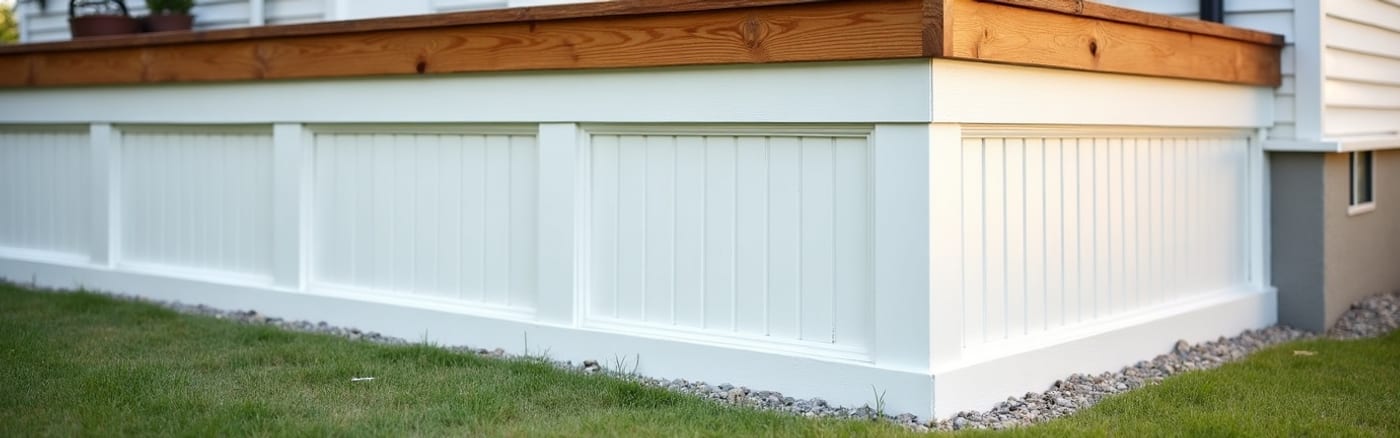
Yes. Mitten states PleasantView secures to the perimeter of any mobile home, cottage, deck or foundation, and Kaycan describes its system for porches, patios, enclosures and foundation surrounds. It is the usual replacement for wooden lattice under a raised deck, because vinyl will not rot, peel, flake or blister, never needs painting, and does not attract termites.
Do you carry insulated mobile home skirting?
No. Both lines we stock are uninsulated vinyl, and vented skirting is deliberately open to outside air. Skirting cuts the wind and keeps drifting snow out from under the floor, but it is not a thermal layer, so pipes under a skirted home in Ontario still need heat trace or insulated wrapping. Closing the vents over winter is the wrong fix: it traps the moisture the vents are there to move.
Can I install vinyl skirting myself?
Kaycan publishes its system as a do-it-yourself install, and neither manufacturer's tool list includes a power tool. Mitten lists tin snips, a plumb bob, a chalk line, 6" ground spikes, 1.5" galvanized roofing nails, a snap lock tool and a hammer. Kaycan lists a hammer, chalk line, tape measure, tin or aviation snips and a plumb bob, plus galvanized spikes and roofing nails.
What colours does vinyl skirting come in?
White only, on both lines. Mitten calls its shade Frost White and Kaycan lists white as the sole availability across all five components of its system. That is the long-standing standard for manufactured home and cottage skirting, and it sits under any white-based siding, soffit or trim without a colour-matching exercise.
What is the difference between the Mitten and Kaycan skirting systems?
Mitten PleasantView is a triple-4" panel laid horizontally in 12" courses and sold by the piece against a perimeter-and-height chart, with a front rail that pops up for access behind the skirt. Kaycan is a vertical board panel cut to height on site and sold by carton coverage in square feet, and it carries a Lifetime Limited Warranty to the original homeowner, prorated over 50 years for transferees.