
Soffit & Fascia
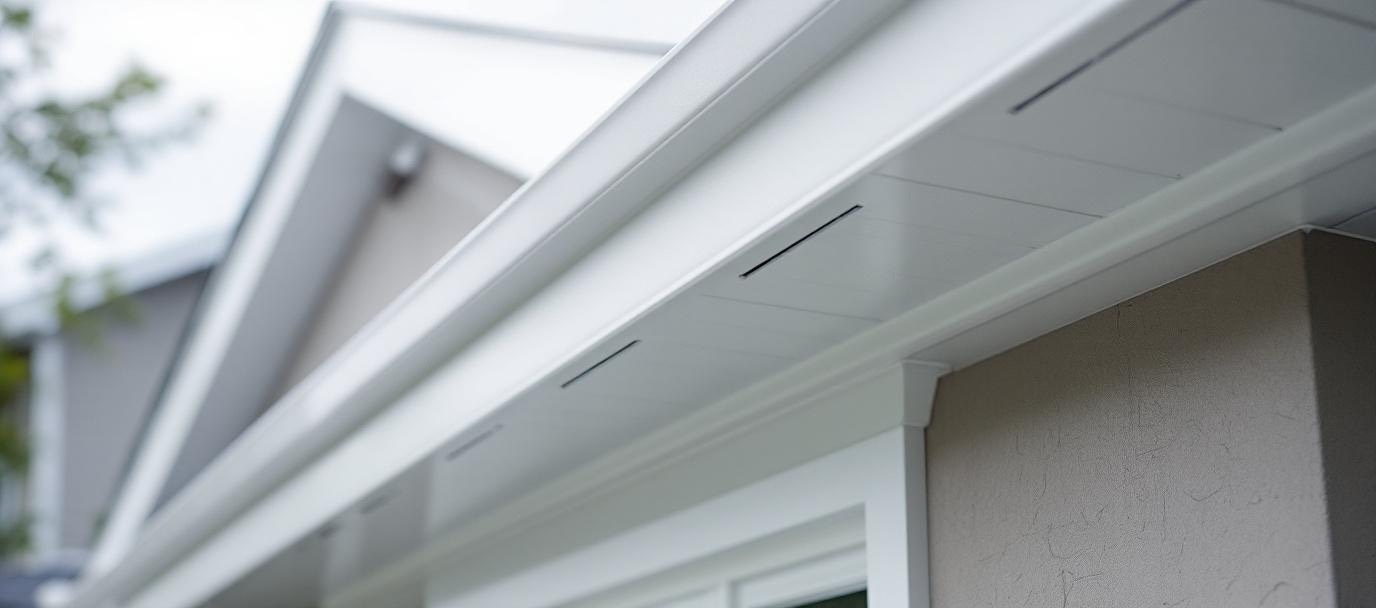
About Soffit & Fascia
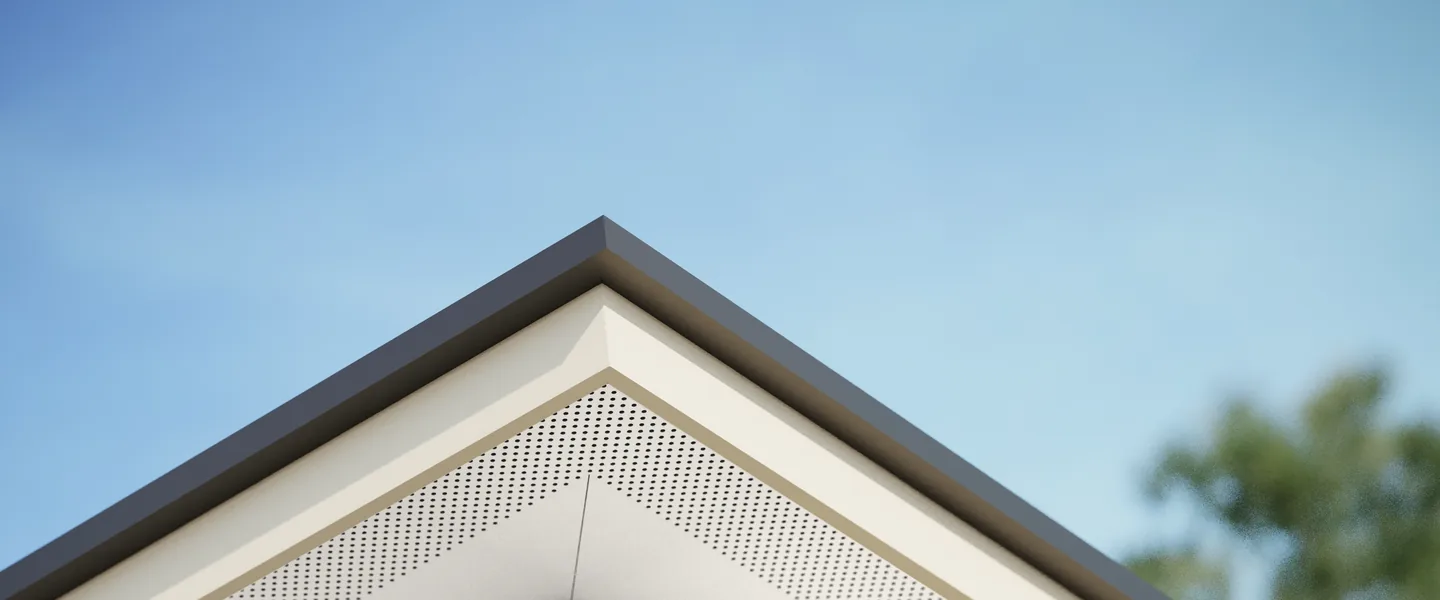
Soffit and fascia complete the roofline - protecting rafter tails and sheathing edges, closing off the eave, and providing the attic ventilation that keeps Canadian homes healthy through freeze-thaw cycles and humid summers. Pro Materials supplies aluminum and vinyl soffit and fascia from Mitten and Kaycan in vented, solid, and beaded profiles, matched to their siding colour systems so the full exterior reads as one coordinated package, and Hardie® Soffit fibre cement panels for Hardie walls.
Proper soffit ventilation is among the most cost-effective performance specifications you can make on any project: the right intake-to-exhaust balance prevents moisture buildup, ice dams, and premature sheathing decay. Whether you're matching existing siding or specifying a complete new system, we carry the profiles, widths, and colours your job requires. We supply contractors and builders across York Region and the GTA at wholesale pricing.



Soffit & Fascia: At a Glance
7
Products
in this category
3
Brands
Mitten, Kaycan, James Hardie
Up to 22
Colour Options
per product line
Quote
Pricing
request for trade pricing
Max colour range per brand
Kaycan
22
Mitten
9
James Hardie
5
Showing maximum colour count across products per brand. Actual available colours may vary by profile and current stock.
Soffit & Fascia Buying Guide
Key factors to evaluate when specifying soffit & fascia for your project.
Vented or solid
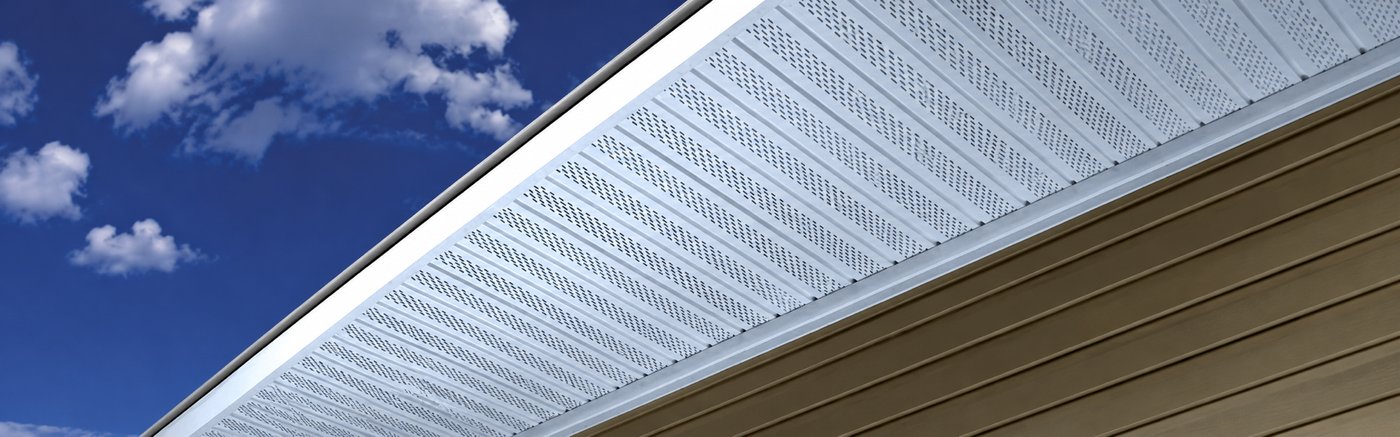
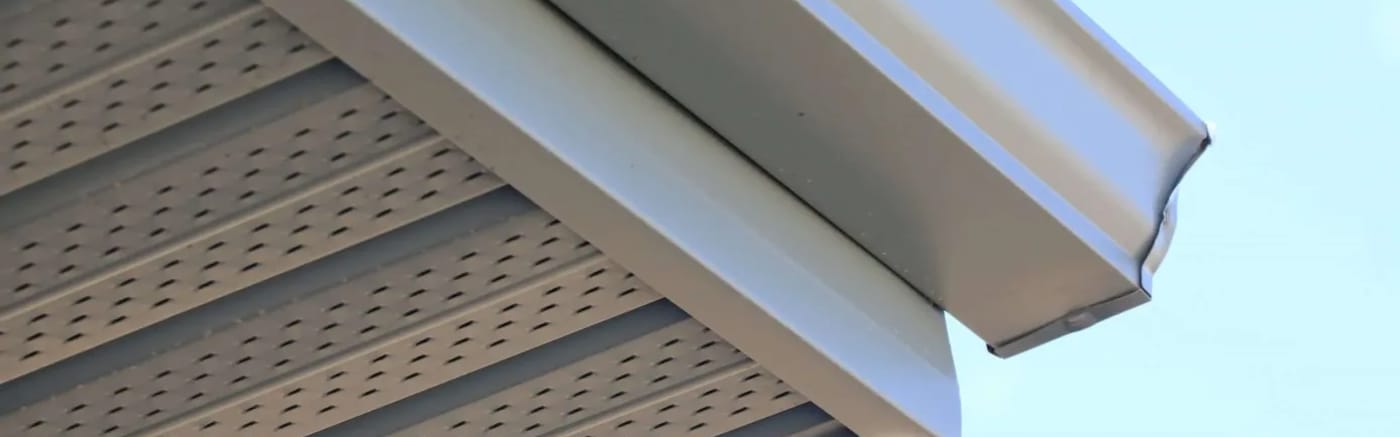
A vented panel lets outside air into the attic at the eave; a solid panel closes the eave where the venting is done elsewhere or where there is no attic space behind it. Every vinyl and aluminum line we stock comes both ways in the same width and the same carton, so one house can run vented panels over the attic and solid ones on a porch ceiling. Hardie® Soffit also comes vented or non-vented.
How much venting the code asks for
The Ontario Building Code (Article 9.19.1.2) sets the unobstructed vent area at no less than 1/300 of the insulated ceiling area, or 1/150 where the roof slope is less than 1 in 6 or the roof is built with roof joists. The vents have to be spread uniformly on opposite sides of the building, with at least 25 percent of the openings at the top of the space and at least 25 percent at the bottom, which is where soffit vents sit.
Net free air decides how much vented panel you need
Vented panels are rated in square inches of net free air per linear foot, and the spread is wide: Mitten Triple 4 runs from 1.96 (Perforated Center Vent) to 7.2 (Lanced Full Vent). For a 1,500 sq. ft. insulated ceiling at 1/300, the code minimum is 720 sq. in. of vent, and at least 180 sq. in. of that belongs at the bottom. That is 25 linear feet of Lanced Full Vent, or about 92 feet of Perforated Center Vent. The table below lists the figure for each vented profile we hold.
Material
Aluminum: Kaycan's 16 in. panels come in regular and heavy gauge with a baked Two-Coat finish and a lifetime limited warranty, and Mitten's M-Series Quad 4 comes in the 13 M-Series colours, which Mitten designs to match or complement its siding. Vinyl: Mitten's soffits are .040 in. gauge with a lifetime non-prorated transferable warranty (CCMC 06419L), and Kaycan's are made with its Duratron™ vinyl formula. Fibre cement: Hardie® Soffit is noncombustible under CAN/ULC-S114, comes in 12, 16 and 24 in. widths, and its vented panels give 5 sq. in. of net free ventilation per lineal foot.
Fascia
Pre-formed aluminum fascia comes from Kaycan in 4, 6, 8 and 10 in. widths and from Mitten's M-Series in smooth or ribbed, 6, 8 and 10 in. Where no stock width fits the eave, it is brake-formed on site from aluminum trim coil in the same colour.
Colour coordination
Kaycan says its aluminum trims are colour-matched to its siding and soffit, and Mitten designs its M-Series aluminum to match or complement its siding, but not every siding colour has a soffit or fascia of the same name. Our exterior house colours guide charts which Mitten and James Hardie colours carry from the wall to the eave. Matching the fascia to a dark window or trim colour is a common way to sharpen a modern elevation.
Soffit Coverage per Carton and Net Free Air
Every soffit we stock, with the manufacturer's carton coverage and, for vented profiles, the net free air intake per linear foot. Solid and vented versions of a line share the same width and carton.
- Width
- 16 in.
- Pieces per carton
- 12
- Coverage per carton
- 192 sq. ft.
- Vented: net free air, sq. in. per lin. ft.
- —
- Width
- 16 in.
- Pieces per carton
- —
- Coverage per carton
- —
- Vented: net free air, sq. in. per lin. ft.
- 5.16
- Width
- 12 in.
- Pieces per carton
- 16
- Coverage per carton
- 192 sq. ft.
- Vented: net free air, sq. in. per lin. ft.
- 1.96 to 7.2, by vent pattern
- Width
- 10 in.
- Pieces per carton
- 20
- Coverage per carton
- 200 sq. ft.
- Vented: net free air, sq. in. per lin. ft.
- 4.2
- Width
- 8 in.
- Pieces per carton
- 24
- Coverage per carton
- 192 sq. ft.
- Vented: net free air, sq. in. per lin. ft.
- 3.14
- Width
- 16 in.
- Pieces per carton
- 12
- Coverage per carton
- 192 sq. ft.
- Vented: net free air, sq. in. per lin. ft.
- 6.26
- Width
- 7 in.
- Pieces per carton
- 28
- Coverage per carton
- 200 sq. ft.
- Vented: net free air, sq. in. per lin. ft.
- 2.66 (Hidden Vent)
- Width
- 10 in.
- Pieces per carton
- 20
- Coverage per carton
- 200 sq. ft.
- Vented: net free air, sq. in. per lin. ft.
- —
- Width
- 12 in.
- Pieces per carton
- 16
- Coverage per carton
- 192 sq. ft.
- Vented: net free air, sq. in. per lin. ft.
- —
- Width
- 8 in.
- Pieces per carton
- 24
- Coverage per carton
- 192 sq. ft.
- Vented: net free air, sq. in. per lin. ft.
- —
- Width
- 16 in.
- Pieces per carton
- 12
- Coverage per carton
- 192 sq. ft.
- Vented: net free air, sq. in. per lin. ft.
- —
- Width
- 8 in.
- Pieces per carton
- 12
- Coverage per carton
- 100 sq. ft.
- Vented: net free air, sq. in. per lin. ft.
- —
- Width
- 12, 16 or 24 in.
- Pieces per carton
- Sold by the panel
- Coverage per carton
- 12, 16 or 16 sq. ft. per panel
- Vented: net free air, sq. in. per lin. ft.
- 5
| Soffit | Width | Pieces per carton | Coverage per carton | Vented: net free air, sq. in. per lin. ft. |
|---|---|---|---|---|
| Kaycan Aluminum Soffit (8 profiles) | 16 in. | 12 | 192 sq. ft. | — |
| Mitten M-Series Quad 4 (aluminum) | 16 in. | — | — | 5.16 |
| Mitten Triple 4" (vinyl) | 12 in. | 16 | 192 sq. ft. | 1.96 to 7.2, by vent pattern |
| Mitten Double 5" (vinyl) | 10 in. | 20 | 200 sq. ft. | 4.2 |
| Mitten Jamb-Fit™ 8" (vinyl) | 8 in. | 24 | 192 sq. ft. | 3.14 |
| Mitten Jamb-Fit™ 16" (vinyl) | 16 in. | 12 | 192 sq. ft. | 6.26 |
| Mitten 7" Beaded (vinyl) | 7 in. | 28 | 200 sq. ft. | 2.66 (Hidden Vent) |
| Kaycan Vinyl Soffit, Double 5 | 10 in. | 20 | 200 sq. ft. | — |
| Kaycan Vinyl Soffit, Triple 3 | 12 in. | 16 | 192 sq. ft. | — |
| Kaycan Vinyl Soffit, 8 in. 2-panel | 8 in. | 24 | 192 sq. ft. | — |
| Kaycan Vinyl Soffit, 16 in. 4-panel | 16 in. | 12 | 192 sq. ft. | — |
| Kaycan Vinyl Soffit, Beaded | 8 in. | 12 | 100 sq. ft. | — |
| Hardie® Soffit (fibre cement) | 12, 16 or 24 in. | Sold by the panel | 12, 16 or 16 sq. ft. per panel | 5 |
Manufacturer figures from our catalogue. Panels are 12 ft. long, except Kaycan beaded at 12 ft. 6 in. and Hardie® Soffit at 8 ft. in the 24 in. width. A dash means the figure is not in the data we hold; ask for it with your quote. Add a waste allowance before converting eave area into cartons.
Frequently Asked Questions
How much vented soffit do I need?
The Ontario Building Code (Article 9.19.1.2) asks for unobstructed vent area of at least 1/300 of the insulated ceiling area, or 1/150 where the roof slope is less than 1 in 6 or the roof is built with roof joists, with at least 25 percent of the openings at the bottom of the space and 25 percent at the top. Divide the bottom share by the panel's net free air per linear foot to get the run: 180 sq. in. needs 25 feet of Mitten Triple 4 Lanced Full Vent at 7.2, but about 92 feet of its Perforated Center Vent at 1.96.
How many square feet are in a box of aluminum soffit?
A carton of Kaycan aluminum soffit holds 12 panels, each 16 inches wide and 12 feet long, which covers 192 square feet. The vinyl soffit cartons we stock cover 192 or 200 square feet, except Kaycan's beaded soffit at 100.
Can I mix vinyl siding with aluminum soffit and fascia?
Yes, this is the most common combination in Canadian construction. The key is colour matching - both Mitten and Kaycan offer coordinated colour systems across their siding and soffit/fascia lines.
What is the difference between J-channel and F-channel soffit trim?
J-channel is used where the soffit meets a vertical surface and the panel slides into the J receiver. F-channel is used at the inside corner of the soffit and fascia, holding both the soffit panel and the bottom edge of the fascia board. The two work together to create a clean, concealed fastening system.