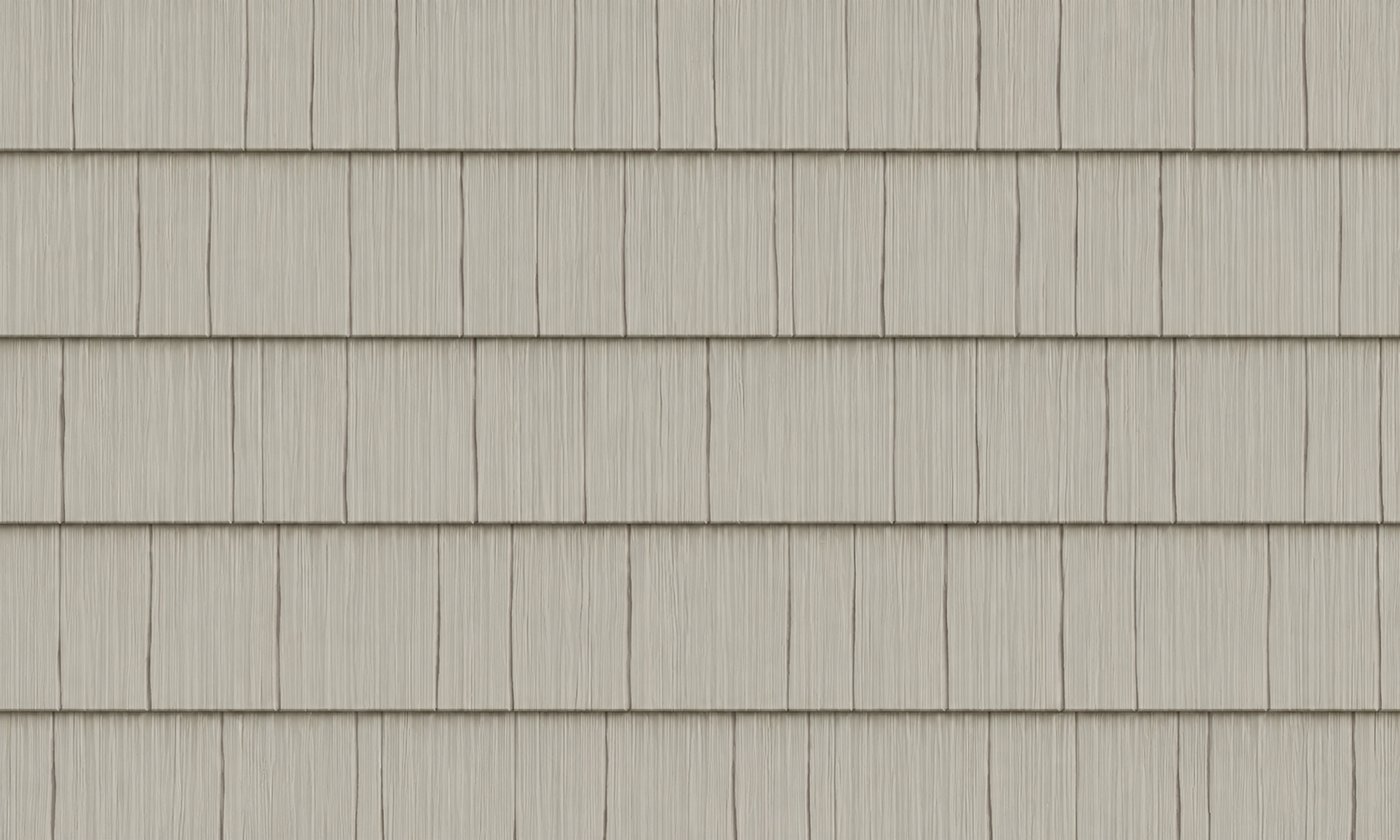
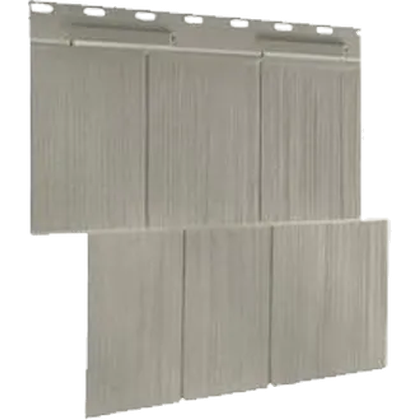
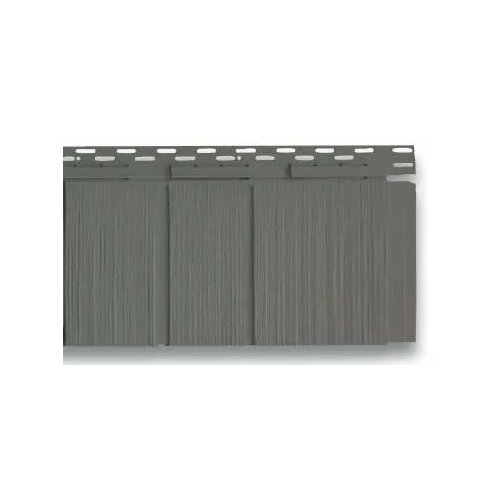
- 1
Install over solid substrate 7/16" or better with nail holding strength (e.g., Plywood, OSB).
- 2
Use of a plastic or woven house wrap is recommended.
- 3
Accessories require a minimum 3/4" pocket width opening for J-Channel, Inside, and Outside Corners.
- 4
Not recommended to install over existing real cedar siding.
- 5
Painting or staining panels will void the warranty. Not intended as a roof covering. Vertical application only.
- 6
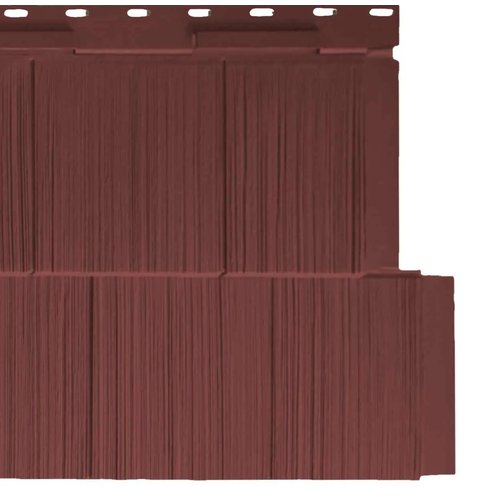
Panels expand and contract with temperature — position each panel using the temperature indicator gauge provided at time of installation.
- 7
Temperature gauge positions: 100°F–91°F → 100°F Line; 90°F–76°F → between 65°F & 100°F Lines; 75°F–56°F → 65°F Line; 55°F–41°F → between 35°F & 65°F Lines; 40°F–35°F → 35°F Line.
- 8
Install Corner Post, Molded Corner Pieces, or J-Channel vertically on the wall — pocket width must be a minimum of 3/4".
- 9
Install the Starter Strip level at the bottom of the wall; allow 1/4" gap inside the J-Channel or Corner Post for expansion and contraction.
- 10
After Starter Strip is level: place one full panel inside the left J-Channel or Corner Post and mark its top with a pencil; repeat on the right side of the wall; stretch a chalk line between the two points — this is the guide for hanging the first course.
- 11
To install the first shingle panel: cut a straight edge on the side so it fits into the J-Channel or Corner Post; hook the bottom lock into the starter strip and slide into the J-Channel or Corner Post; leave 1/4" space between the cut panel edge and the J-Channel or Corner Post.
- 12
Drive all nails along the nailing hem until a 1/8" to 1/16" space remains — this allows freedom of movement during normal expansion and contraction.
- 13
Nails must be centered in every nail slot. Every panel must have a nail through the center nail hole to prevent the panel from shifting left or right.
- 14
Recommend a nail every 8–12 inches.
- 15
Install the 2nd panel by hooking it into the starter strip and sliding it over to engage the side lock tab. Tip: if having problems with the side lock, install panels starting on an angle and sliding up and over.
- 16
Position each panel so the temperature indicator correlates with the air temperature at installation.
- 17
Every 3–4 courses, measure up 14-1/4" from the top of the panel on both sides and stretch a chalk line to verify panels are hanging straight.
- 18
Use random length starter pieces — every starter course should be a different length than the previous course to avoid a repeat pattern. Cut starters between 6" and 46".
- 19
Never use the scrap piece cut from the end of the last course as your next starter — a repeat pattern will appear on the 4th or 5th course.
- 20
For the top panel in a course: drill a 3/16" hole in the center of the top nail hem, then place a nail in that hole and continue installation.
- 21
After inserting panels together, verify the side lock by pulling back the right top side of the panel — the left locking tabs should move with the right side if the panels are locked.
- 22
Peek around the left side of the joint using your fingers or a flat pry bar to verify the bottom lock is fully engaged; a large gap indicates the bottom lock has been missed.
- 23
For starters at a J-Channel: measure from inside the J-Channel to the right side of a top lock, then subtract 1-1/2" (allows 1/4" spacing inside J-Channel); flip panel to back side, mark, and cut.
- 24
For finishers at a J-Channel: measure from inside the J-Channel to the temperature gauge indicator leaving room for expansion; flip panel to back side, mark, and cut; install in a down-to-up motion applying even pressure on top and bottom locking tabs.
- 25
Leave 1/4" of space around all windows — the panel will warp and buckle off the wall if space is not provided.
- 26
When nailing panels around the bottom of a window, use small head finish nails to prevent pieces from falling down.
- 27
When finishing at a gable or soffit: measure from the top of the panel down 1-7/8"; then measure down to the J-Channel allowing 1/4" spacing; mark and cut the top of the panel; lock the panel into the J-Channel.
- 28
Optional: cove molding may be used as a decorative edge to snap into F-Channel — it also helps fasten the panels more securely to the wall. Contact your local distributor for availability.