- 1
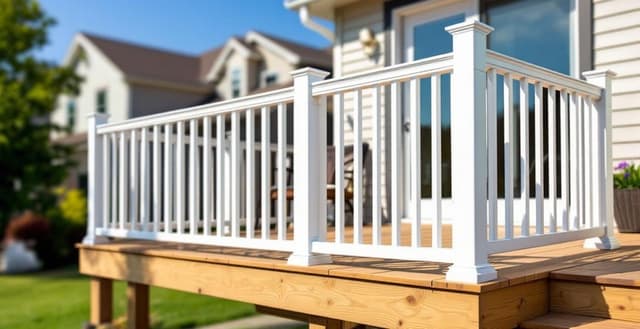
BUILDING CODE HEIGHT — Confirm the required railing height before installation. Decks 1.8m or less above grade require a minimum 35" (889mm) railing height. Decks more than 1.8m above grade require a minimum 42" (1067mm) railing height. Complies with OBC 2006 Part 9 Division B and NBC 2005 Section 9.8.8.2(1). Always verify current local building code requirements before starting.
- 2
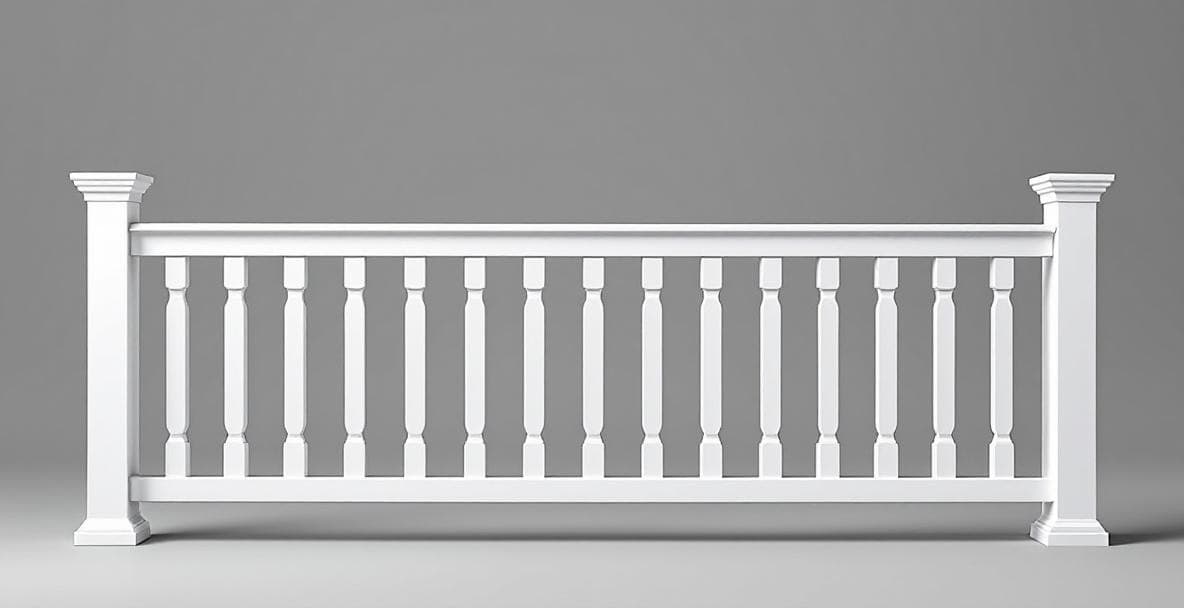
POST SPACING AND OPENING LIMITS — Plan post (newel post) locations so that center-to-center spacing does not exceed 8'-0" for baluster sections or 6'-4" for glass sections. The maximum opening between post covers (outside surface to outside surface) is 92" for baluster sections and 72" for glass sections.
- 3
POST REINFORCEMENT INSTALLATION — The kit includes a steel post reinforcement that slides inside the PVC post cover. ALWAYS install the post reinforcement so that the gap in the reinforcement faces AWAY from the direction of load (i.e. away from the side a person would lean). Failure to orient the gap correctly reduces structural performance. Use four 3/8" × 6" zinc-plated hex-head lag screws with washers to attach the post to a wood substructure, or four Simpson Wedge-All 3/8" × 3-3/4" anchors (torqued to 30 ft/lbs) for concrete. NOTE: Lag screws and concrete anchors are NOT included with the kit and must be sourced separately.
- 4
SNAP ON POST SKIRT — After setting the post and before installing rails, snap the two-part vinyl post skirt onto the base of each post. The skirt covers the base hardware and provides a finished appearance at the deck surface.
- 5
CUTTING RAILS TO LENGTH — Measure the distance (top and bottom) between posts and cut both the top rail retainer and bottom rail retainer to fit. Use a chopsaw with a 10" blade (60 teeth recommended). If rails need to be shortened, cut symmetrically from both ends — for example, to shorten by 3", cut 1-1/2" from each end. Do not cut balusters — they are supplied at a fixed length.
- 6
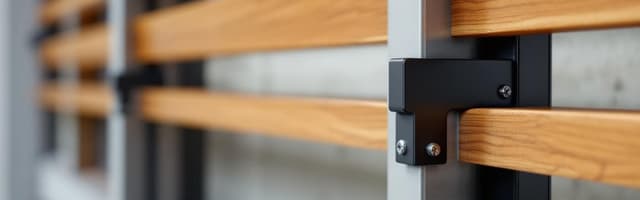
BOTTOM POST SCREW AND L-BRACKET SETUP — Drive a #10, 3/4" self-drilling Tek screw into the post cover and reinforcement at the bottom rail height. Loosen the screw 1/8 of a turn so it remains slightly exposed — the rail L-brackets will slide onto this exposed screw. Separately, screw #6, 3/8" self-drilling screws through the L-brackets into the ends of the bottom rail retainer.
- 7
BOTTOM RAIL INSTALLATION — With the L-brackets attached to the bottom rail retainer ends, slide the L-brackets down onto the exposed bottom post screws at each post. Ensure the bottom rail is level across the full span before proceeding.
- 8
BALUSTER SPACING AND INSTALLATION — Calculate the number of balusters required so that no gap between outside faces of adjacent balusters exceeds 3-3/4" (95mm). Space balusters evenly across the section. Snap balusters into the bottom rail channel, then fit the top rail assembly over the baluster tops.
- 9
TOP RAIL ATTACHMENT — Secure the top rail into place using #10, 3/4" self-drilling Tek screws — four screws per post connection. After the structural rail is fastened, snap the decorative top (hand) and bottom rail covers into place over the rail retainers.
- 10
GLASS PANEL INSTALLATION (GLASS SERIES) — Insert 6mm tempered glass panels into the bottom rail channel with a vinyl gasket. Handle glass carefully — wear gloves and do not impact edges. After glass is in place, fit the top rail over the glass. Once complete, cut the glass rail track filler to length and install it at each of the four ends of the glass section.
- 11
POST CAP INSTALLATION — Apply standard PVC glue or silicone adhesive to the inside lips of the post cap, then press the cap firmly onto the top of the post. For newel posts, glue the inside lips of the newel post cap and place on the newel post. Seat caps fully using a rubber mallet if needed.
- 12
STAIR RAILING — For stair applications, the mounting 'L' brackets must be manually bent to match the stair slope angle — rails themselves are not cut at an angle. Confirm the required handrail height for stair applications with local building code before installation.
- 13
WALL CONNECTION — When a railing run ends at a wall (brick veneer, stone, stucco, or siding), connect the railing to a newel post anchored at the wall. For brick veneer walls, a post is required at minimum every 5'-0" measured above the foundation wall.
- 14
MAINTENANCE AND WARRANTY — Alpa vinyl railings are maintenance free and do not need to be painted. PAINTING THE PRODUCT WILL VOID THE WARRANTY. Lags or concrete anchors are not included with the kit — fasteners used to install newel posts and railing sections must be sourced separately.