
Eavestrough Guide for Ontario Contractors: Types, Sizing, and What to Spec (2026)
Key points
- Eavestrough is the Canadian term for the full roof-drainage system: the trough, downspouts, hangers, outlets, and end caps all working as one
- A 6-inch K-style eavestrough carries noticeably more water than a 5-inch, and a 3x4 downspout has twice the opening area of a 2x3, so sizing matters more than brand
- Installed eavestrough cost in Ontario runs $5 to $18 CAD per linear foot depending on material, profile size, and whether the run is seamless or sectional

A homeowner in Barrie calls in July because water is sheeting over the front of the house during every summer storm, right where the walkway meets the porch. The eavestrough is not broken. It is a 5-inch trough on a steep, wide roof plane that concentrates runoff faster than the channel can carry it, feeding a single undersized downspout. That is the story behind most eavestrough complaints in Ontario: the material is fine, the sizing is wrong. Getting an eavestrough right is less about picking a brand and more about matching the system to the roof and the weather.
Watch: how to size and spec an eavestrough system for Ontario rain and snow.This guide treats the eavestrough as what it actually is, a system of four decisions rather than a single product. Material, size, seamless or sectional, and gutter protection each change the outcome, and each has a clear right answer once you know the roof. If you are pricing a full exterior package, our metal siding cost guide for Ontario covers the wall above the trough; here the focus is everything that moves water off the roof and away from the foundation.
What Is an Eavestrough? Canada's Word for the Whole System
An eavestrough is the Canadian term for a roof gutter: the channel fixed along the eave that catches roof runoff and routes it to downspouts and away from the foundation. The word covers the entire system, the trough, downspouts, hangers, outlets, corners, and end caps, working together, not just the visible metal channel. Ontario and most of Canada say eavestrough; Americans say gutter. Same part, same job.
Thinking of it as a system matters because the trough alone never fails on its own. At Pro Materials, we see this often from contractors in York Region: an overflow blamed on the eavestrough traces back to too few downspouts, an undersized outlet, or a hanger spacing that let the run sag and pond. A complete Kaycan eavestrough package, for example, ships as coordinated parts, gutter lengths plus joint connectors, corners, drop outlets, hangers, gutter wedges, and end caps, so the run performs as one piece rather than a channel bolted to guesswork. That coordination runs across the whole brand, which our Kaycan siding guide covers in full.
Eavestrough Systems at Pro Materials
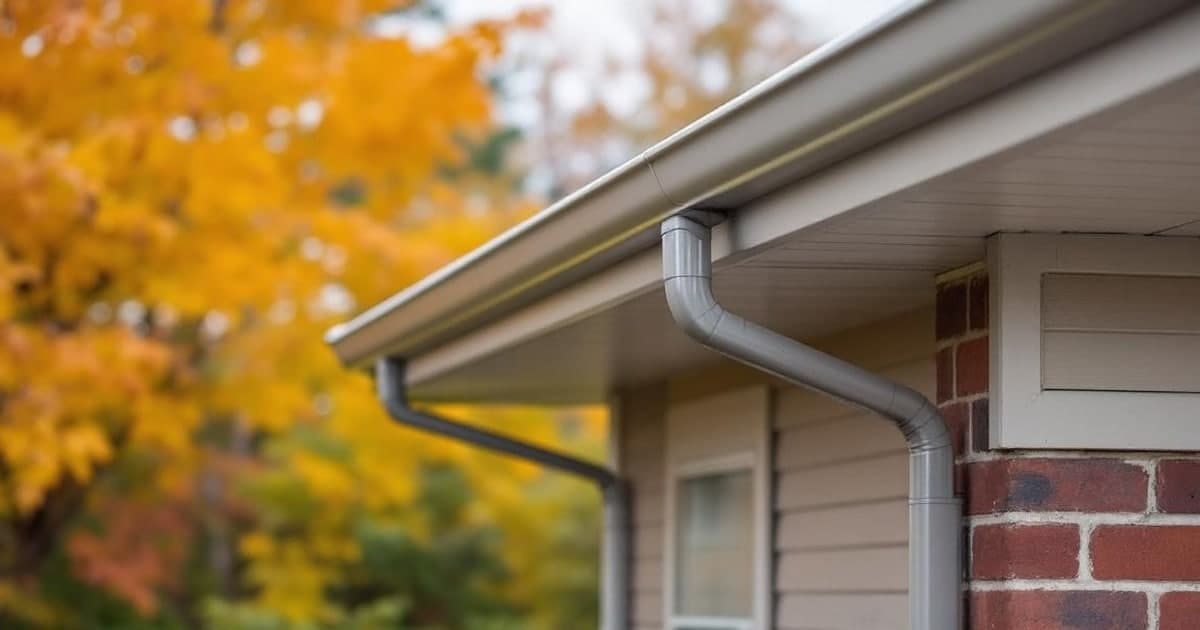
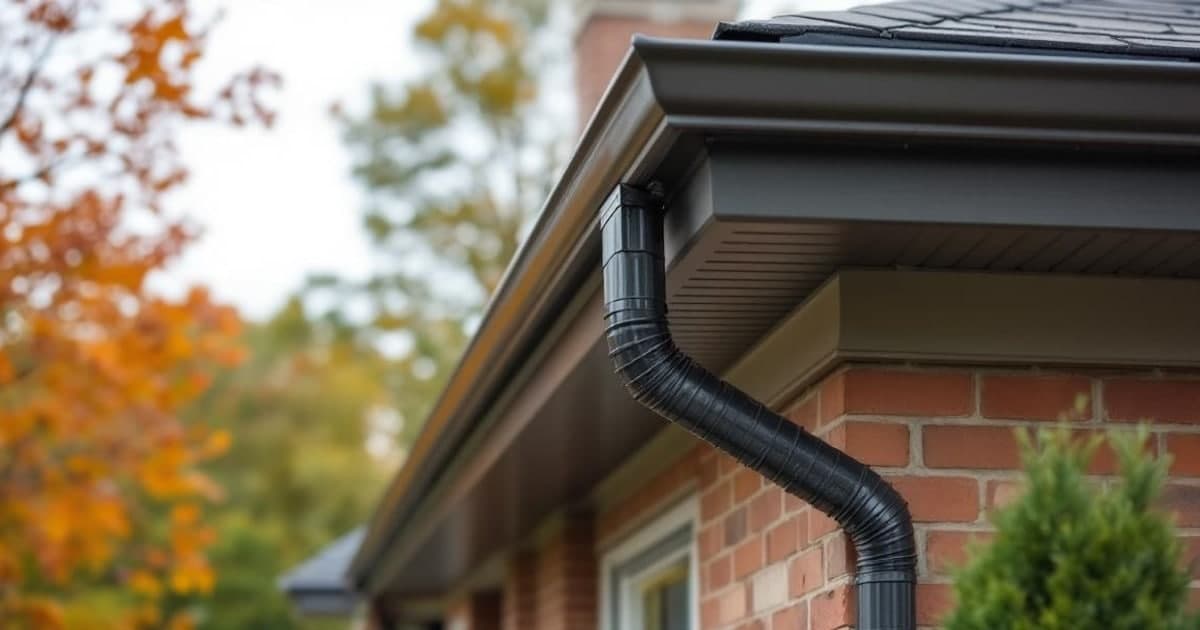
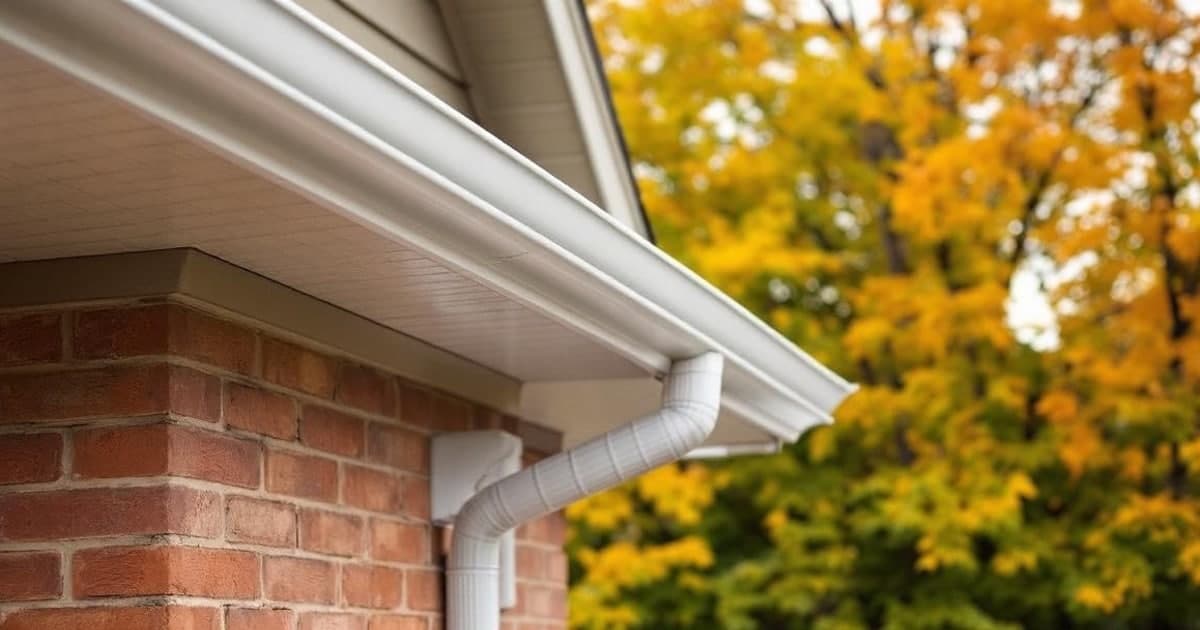
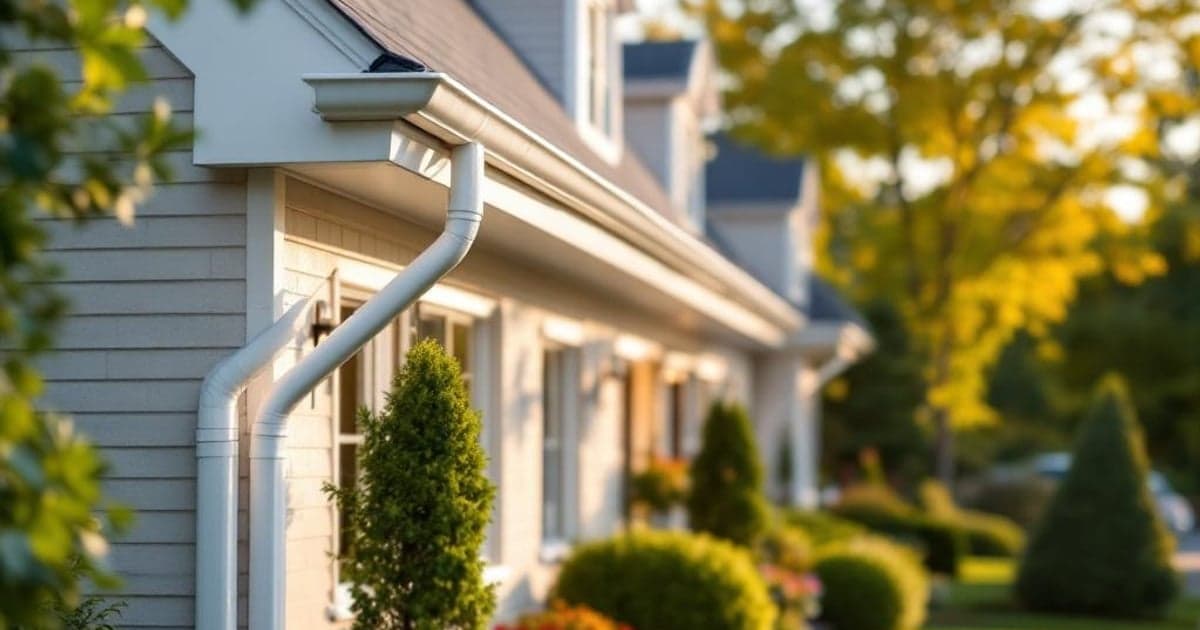
The two profiles you will spec most in Ontario are the K-style, whose flat back and decorative front face mimic crown moulding, and the half-round, a simple semicircular trough favoured on heritage and higher-end homes. K-style holds more water for its face height, which is why it dominates new construction. Browse the full eavestrough and rainware range to see every profile, downspout, and accessory we stock.
Aluminum vs Vinyl: Which Eavestrough Material Should You Spec?
Spec seamless aluminum for most Ontario homes because it runs leak-free on long spans and takes heavy snow and ice without splitting; spec solid vinyl when budget, rust and salt resistance, or a homeowner install drive the job. Both give decades of service, so the choice comes down to span length, access, and who is holding the ladder. The two materials fail in different ways, and that is the real decision.
Aluminum is the default across the GTA. It is formed on site into continuous seamless runs, holds a baked-on colour finish that never needs painting, and carries the weight of packed snow when it is hung on tight hanger spacing. Kaycan coats its own aluminum coil in-house for quality control, and its aluminum rainware comes in 5-inch and 6-inch profiles with matching hangers, corners, outlets and end caps. The trade-off is that aluminum dents under a dropped ladder and corrodes if it sits in constant contact with dissimilar metals. Choosing the colour is a separate question: our exterior house colours guide covers matching the eavestroughs to the siding or using them as part of a contrasting frame.
Solid vinyl solves a different set of problems. It will not rust, dent, chip, or peel, it shrugs off road salt and acid rain, and it snaps together with no special tools, which makes it the honest choice for a homeowner doing their own detached garage. Kaycan's K-Snap and Classic half-round systems weld their joints permanently with cement rather than compression seals, so a sectional vinyl run is not the leaky compromise it used to be. Vinyl's limit is temperature: it grows brittle in deep cold and expands and contracts more than metal, so very long unbroken runs need careful expansion detailing.
| Factor | Seamless Aluminum | Solid Vinyl (PVC) |
|---|---|---|
| Best for | Long runs, two-storey, snow country | Budget jobs, DIY, garages, salt exposure |
| Joints | Seamless, formed on site | Snap-together, cement-welded |
| Colour finish | Baked-on, never repaint | Through-colour, never repaint |
| Cold-weather behaviour | Stable, holds shape | Stiffens, more expansion movement |
| Rust and salt | Can corrode at metal contact | Fully immune |
How Big Should an Eavestrough Be? Sizing for Ontario Rain and Snow
Sizing is the decision homeowners skip and contractors win jobs on. Ontario's summer storms are short and violent, dropping more water in fifteen minutes than a spring drizzle drops in a day, and a trough that overflows in a cloudburst is undersized no matter how clean it is. Two numbers decide capacity: the cross-section of the trough and the cross-section of the downspout outlet feeding it.
The chart below compares the opening area of the downspout sizes Kaycan makes for its aluminum rainware. A 6-inch K-style eavestrough carries noticeably more water than a 5-inch, and a 3x4 downspout has exactly twice the opening area of a 2x3. That second number is the one crews miss: pairing a big 6-inch trough with a small 2x3 outlet bottlenecks the whole system at the hole.
The practical rule we give contractors at our Newmarket counter is simple. Use a 5-inch K-style eavestrough for typical bungalow and small two-storey roof planes, and step up to 6-inch anywhere runoff concentrates: large planes, steep pitches, and valleys that dump two roof faces into one trough. Then add a downspout roughly every 30 to 40 feet, and match a 3x4 outlet to every 6-inch run.
Half-round troughs carry less water than a K-style of the same nominal width, which is why K-style dominates new construction. Their rounded inside has no square corners to trap debris, and their look suits heritage renovations in older Toronto neighbourhoods. For most Ontario roofs, though, the 5-inch versus 6-inch K-style decision and the downspout size are what keep water off the walkway.
Seamless vs Sectional: Which Eavestrough Run Is Right?
Choose seamless aluminum on long, straight, visible runs where leaks and appearance matter most, and choose a sectional snap-together system where DIY installation, exact colour matching, tight budgets, or short broken-up runs make joints a non-issue. Seamless is not automatically better; it is better for a specific set of runs.
A seamless eavestrough is formed on site from a coil, so a 40-foot front elevation becomes one continuous piece with no seams to leak except at the corners and outlets. That is why professional installers reach for it on street-facing two-storey runs. The catch is that seamless needs an on-site forming machine and a trained crew, so it is a pro-install product, not a homeowner one. Our installation partner, Sherak Ltd., installs seamless eavestrough and leaf guards, and our installation services page explains how that works.
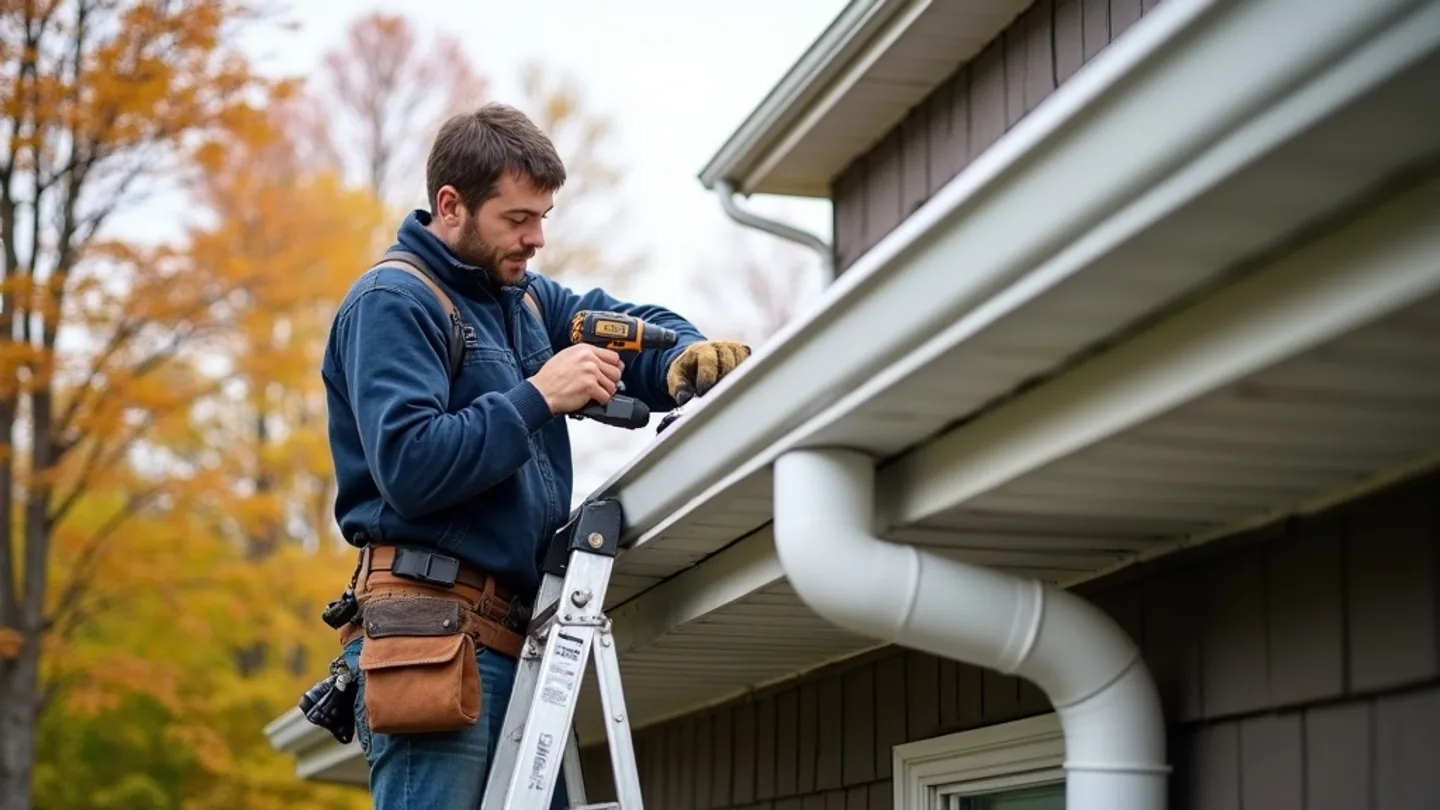 Seamless aluminum eavestrough going up on a two-storey elevation in York Region. Hidden hangers on tight spacing carry the snow load.
Kaycan's sectional vinyl gutters ship in 10-foot lengths that snap and cement together (its sectional aluminum gutter also comes in 20-foot lengths), and modern vinyl systems like K-Snap have closed most of the leak gap with welded joints and reinforced rims that resist the sag that used to plague sectional runs. Sectional wins on short, chopped-up rooflines with lots of jogs, on detached garages and sheds, and any time a homeowner or a small crew is installing without a seamless forming machine. We stock both because the right answer depends on the run, not on a rule.
Do You Need Gutter Guards on Your Eavestrough?
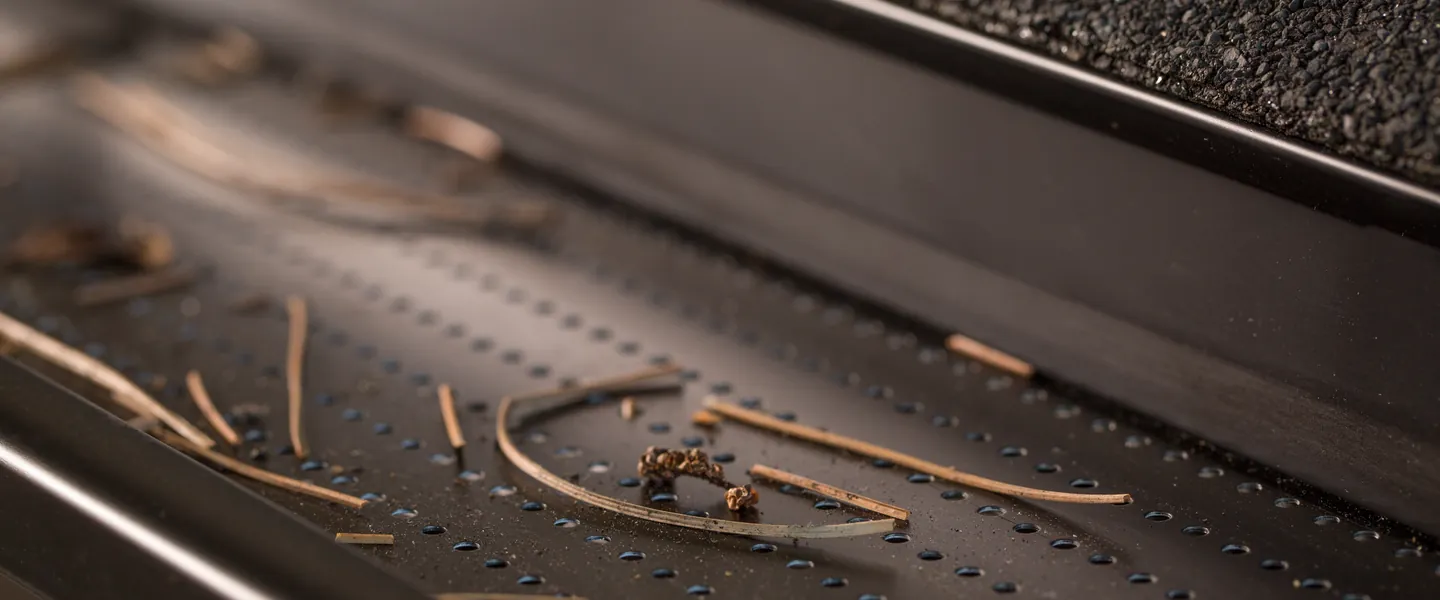
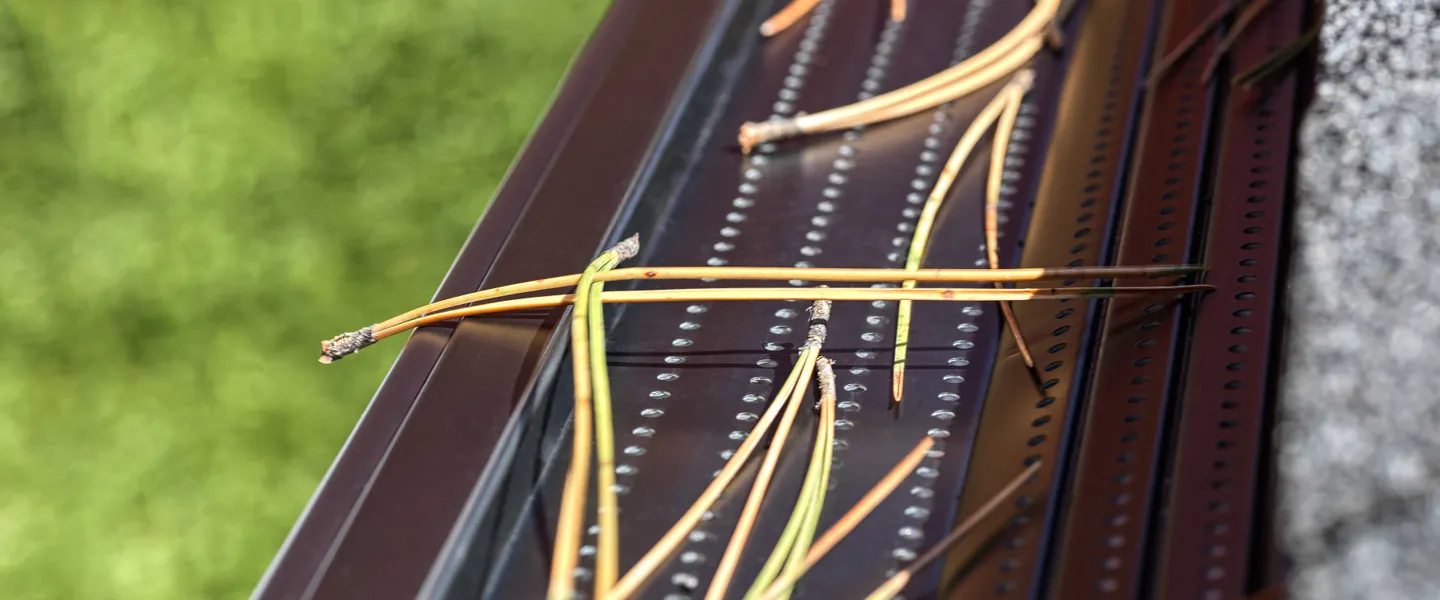
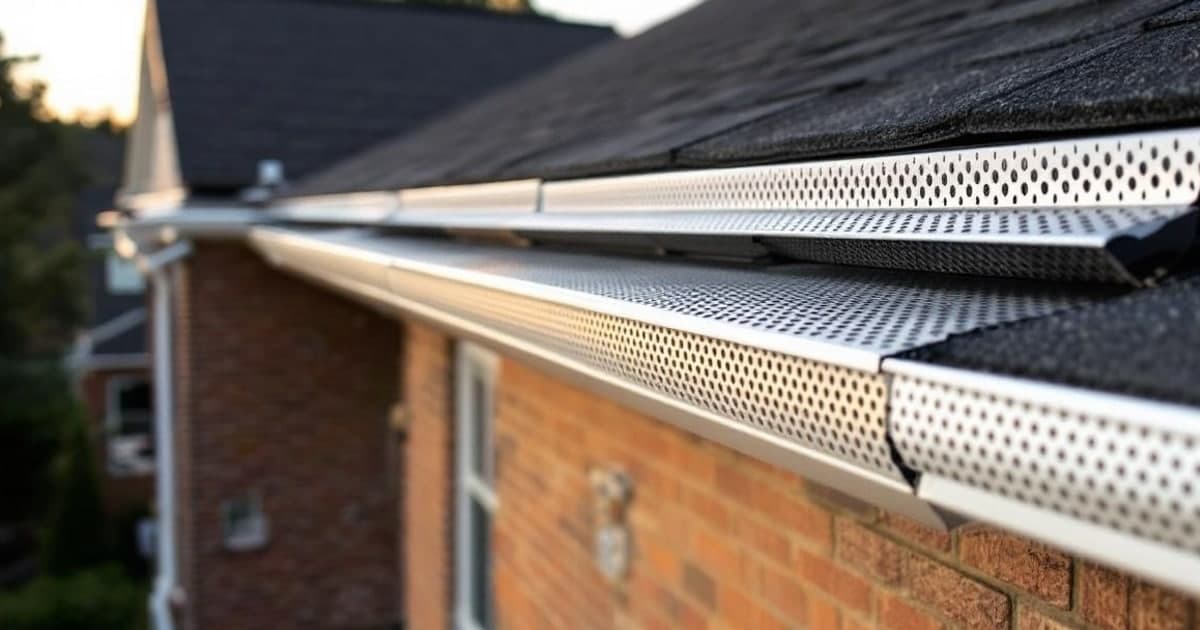
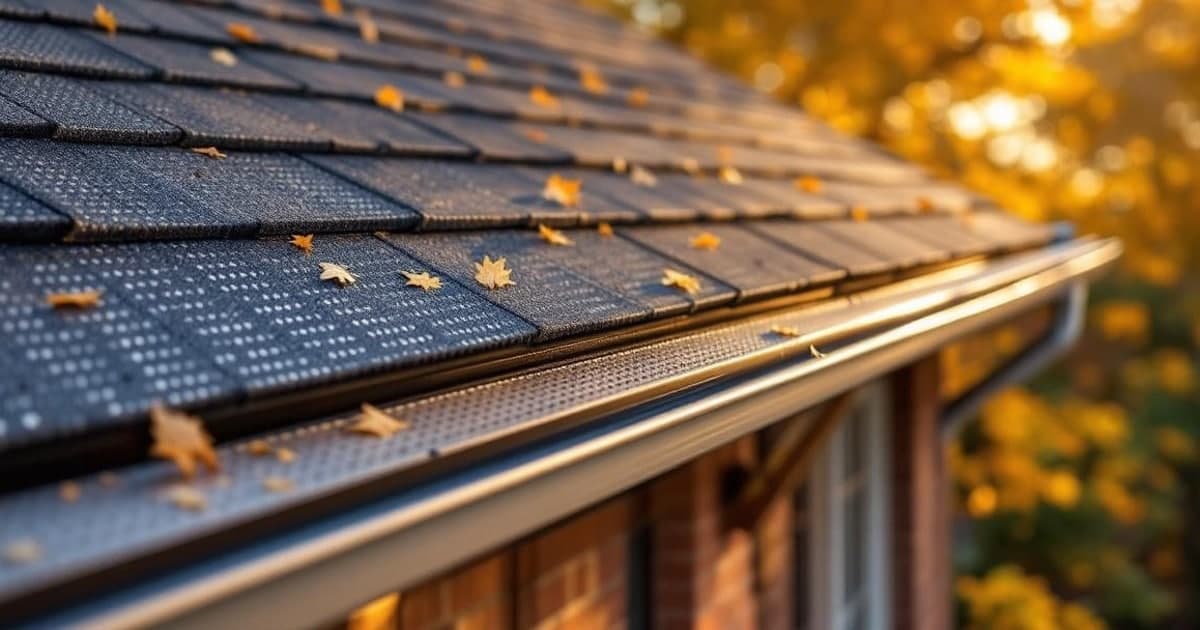
Gutter guards earn their place on Ontario homes with pine, spruce, fir or mature maples near the roof; on open eaves with no overhanging trees they are optional. Under conifers, buy the guard whose clog-free warranty covers conifer needles, because not every one does.
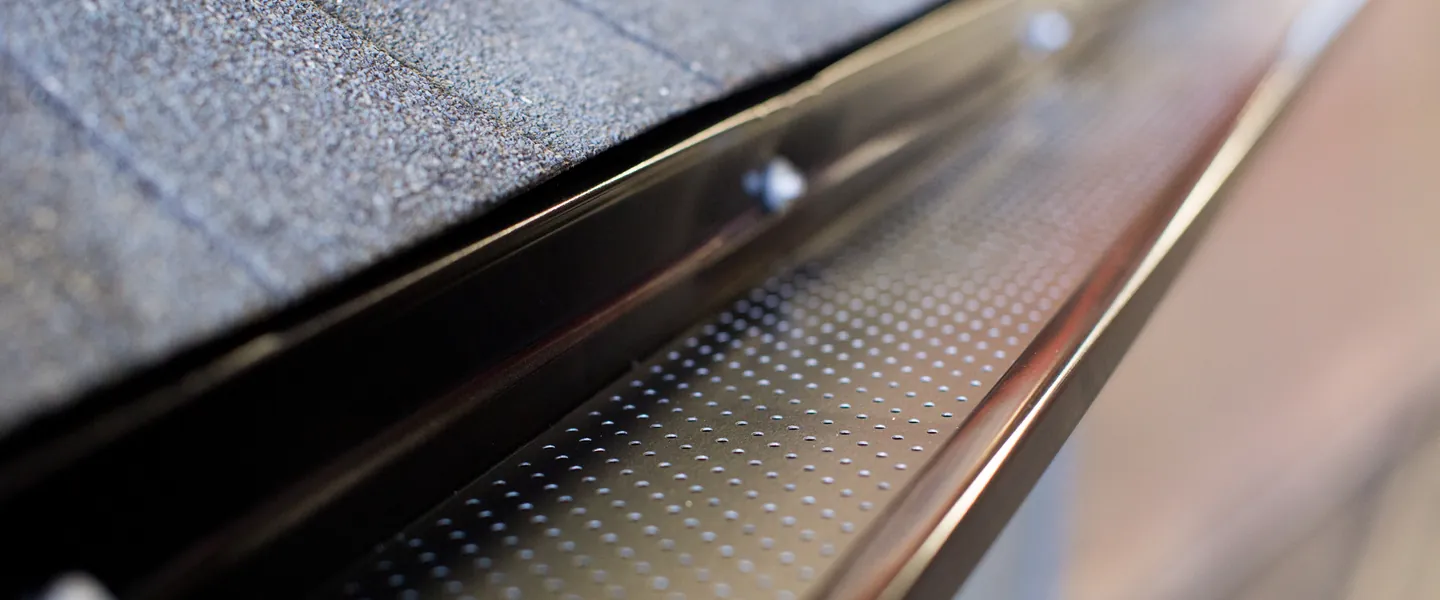
The gutter protection we stock comes from Alu-Rex and Kaycan in two shapes: continuous hangers that hold up a new gutter and carry the guard in the same piece, and covers that go over a gutter that is staying. Alu-Rex's dual-layer DoublePro, Hover Pro and Gutter Clean Pro carry a lifetime clog-free warranty that includes coniferous areas, while its single-layer T-Rex and Gutter Clean System exclude clogging caused by conifers. Kaycan's ProGuard II goes over existing 5 inch gutters in 10 foot and 4 foot lengths, with a matching 6 inch ProGuard, and its Gutter Sentry is a hanger and cover in one for new 5 and 6 inch gutters.
Our gutter guards guide for Ontario homes compares all seven guards we carry on that warranty line, drainage per foot and fit, and sets out what each warranty asks of the installer.
How Much Does Eavestrough Installation Cost in Ontario?
Installed eavestrough cost in Ontario runs about $5 to $9 CAD per linear foot for sectional vinyl, $8 to $14 for 5-inch seamless aluminum, and $12 to $18 for 6-inch seamless aluminum, with gutter protection adding another $3 to $12 per foot. Material is only part of it: two-storey access, corner count, and the number of downspouts move the final number more than the trough itself.
Eavestrough is one of the lines a siding quote quietly leaves out, and the Ontario siding cost pillar shows what it adds to a full re-clad invoice.
The ranges overlap for a reason. A clean single-storey bungalow with a simple rectangular roofline sits at the bottom of each band, while a two-storey with steep pitches, multiple inside corners, and four or five downspouts sits at the top. A contractor re-doing the eavestroughs on a 1980s two-storey in Newmarket, roughly 160 linear feet with five downspouts in 6-inch seamless aluminum, lands near the middle of the 6-inch band before guards. Add continuous gutter protection on the tree-heavy back elevation and the guard line item alone can rival the trough cost on that run.
For a firm number on a full house or a multi-unit job, request a quote online and we will price the trough, downspouts, hangers, and guards by the foot so the estimate matches the purchase order. The same discipline we bring to a stone veneer cost estimate applies here: count the corners and outlets, not just the run.
How to Size and Spec an Eavestrough System in Ontario
Speccing an eavestrough cleanly comes down to sizing from the roof, not from habit: measure the drainage area, pick the trough size, match the downspouts, then decide seamless and protection. Here is the five-step method our estimating desk uses on every rainware quote.
-
Measure every roof plane that drains to a gutter. Multiply each plane's length by its slope width in feet to get the drainage area feeding each eavestrough run. Steeper and larger planes shed water faster and need more capacity.
-
Pick the trough size from the drainage area. Use 5-inch K-style for typical bungalow and small two-storey planes, and step up to 6-inch for large, steep, or valley-fed planes that concentrate runoff at one point.
-
Match the downspout and outlet count. Add a downspout for every 30 to 40 feet of trough, and use a 3x4 downspout on 6-inch runs, since a 3x4 outlet has twice the opening area of a 2x3.
-
Choose seamless or sectional. Specify seamless aluminum on long straight visible runs, and sectional vinyl or aluminum where DIY installation, colour matching, or budget drive the job.
-
Add gutter protection where debris load is high. Fit a continuous guard on runs under conifers, mature maples, or steep grit-shedding roofs, and skip it on clean open eaves to control cost.
This is also the sequence that keeps an eavestrough tied into the rest of the roofline. The trough hangs off the fascia and works alongside the soffit ventilation, so a re-clad is the moment to coordinate all three. Our soffit and fascia installation guide walks the intake ventilation and the fascia load that carries this trough, the soffit panel ordering guide converts that eave run into cartons and trim, and the soffit and fascia range lets you order soffit, fascia and rainware together from Kaycan's coordinated aluminum line, so a crew can finish the entire eave in one pass. Where that eave carries a cellular PVC frieze or fascia board, the PVC trim guide covers the expansion gap the long runs need.
Ontario Climate: Ice, Snow, and Freeze-Thaw
Ontario is the hardest test an eavestrough faces, and it is why sizing and hanger spacing matter more here than in milder regions. Environment Canada's climate normals show about 84 days a year at Toronto Pearson and about 91 at Barrie when the temperature falls to 0 degrees Celsius or below and also climbs above it (1981 to 2010 normals). Each freeze-thaw cycle works at any water trapped in a clogged or ponding trough, and packed snow sliding off a steep roof lands its full weight on the front lip.
Three details carry an eavestrough through a Canadian winter. Hanger spacing comes first: tighter spacing, roughly every 24 inches or closer on steep roofs, keeps the trough from sagging and ponding under ice. Downspout capacity comes second, because a fast spring melt needs somewhere to go before it refreezes overnight. Discharge location comes third: Article 9.26.18.2 of the Ontario Building Code says that where downspouts are not connected to a sewer, extensions must carry the water away from the building in a way that prevents soil erosion, so a downspout that empties against the foundation wall is not a compliant install. Get those three right and the eavestrough survives the freeze-thaw that destroys undersized systems.
Where to Buy Eavestroughs in Ontario
At Pro Materials, we stock Kaycan aluminum and vinyl rainware, half-round systems, aluminum downspouts from 2x3 up to 3x4, hangers, and the full range of gutter protection from ProGuard II and Gutter Sentry to the Alu-Rex guards and hangers we carry as an authorized dealer, all at our new Newmarket showroom and warehouse. We price by the linear foot of trough and the count of downspouts, outlets, and corners so your quote reads like your material list. Deck guards do not price that cleanly, which is why our aluminum and glass railing cost guide counts posts instead of feet. We supply contractors and builders across York Region and the GTA, Simcoe County, and Southern Ontario; the Newmarket and Barrie pages cover pickup and delivery for local eavestrough jobs.
For a large re-clad or a multi-unit job where you need firm lead times and volume pricing before you bid, request a quote online or call the counter and we will build the takeoff with you. Bringing the roof measurements and downspout locations to that conversation is worth it: sizing the system on paper first is what stops the July overflow callback before it happens.
NEWMARKET SHOWROOM Unit 5, 1235 Journey's End Cir, Newmarket, ON L3Y 8T7
Phone: +1 (905) 836-7272 Email: info@promaterials.ca
Gutter Protection and Eave Accessories at Pro Materials

Priya Nair
Building Materials Buyer & Pricing Analyst
Priya manages purchasing and pricing at Pro Materials. She tracks material cost fluctuations across Canadian suppliers and helps contractors understand volume pricing, lead times, and the real cost breakdown of exterior systems.
Share this article