
Board and Batten Siding: The Complete Guide for Ontario Contractors
Key points
- Vinyl vs engineered wood vs fibre cement vs steel board and batten: cost, specs and warranty compared
- Panel specs that matter: 7 inch vinyl exposure, 12 inch CanExel and MAC steel boards, Hardie battens over 4 ft panels
- Installed cost guide: $5 to $8 CAD per sq ft for vinyl vs $12 to $18 for steel
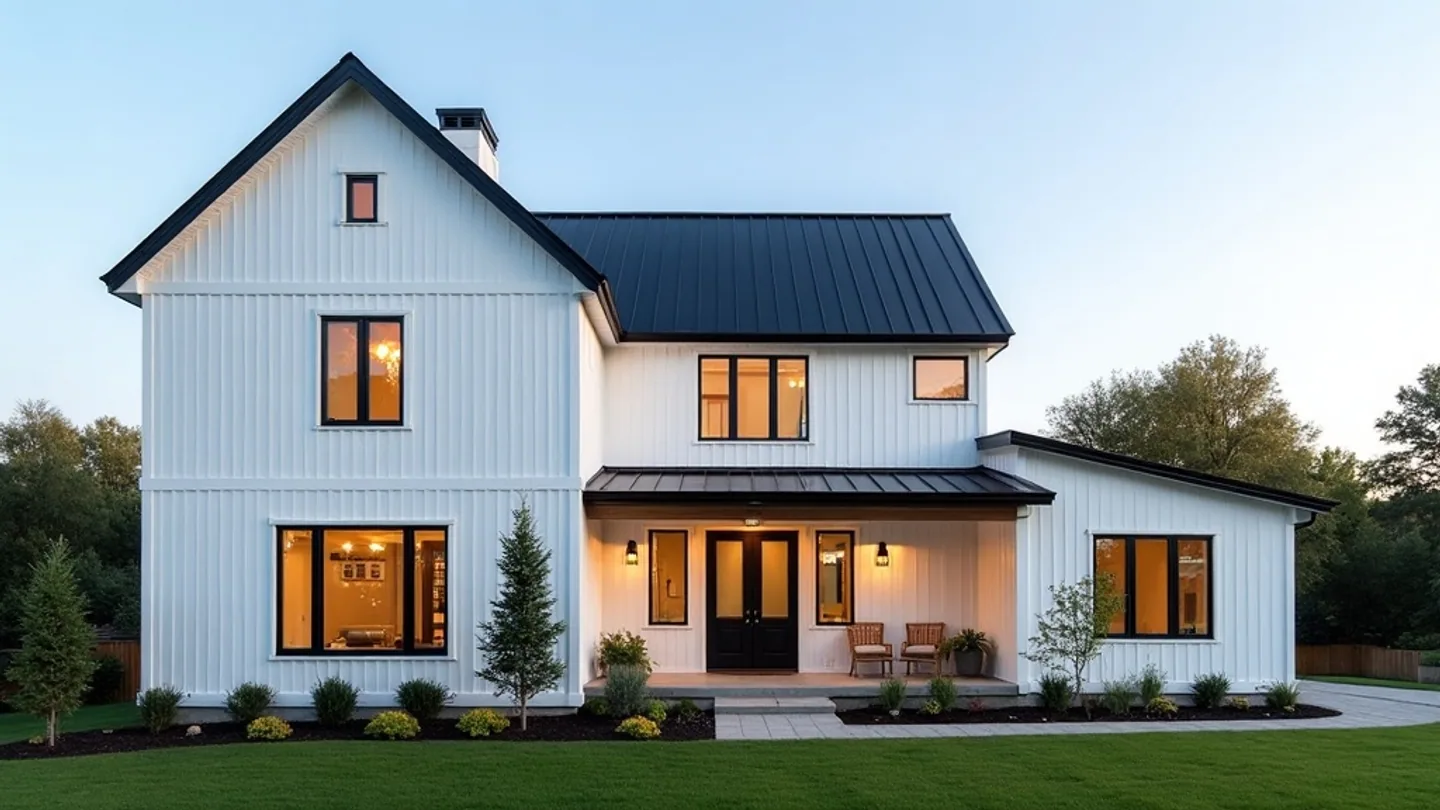
Board and batten siding has moved from a rural barn detail to one of the most requested exterior looks on Ontario job sites. It runs the vertical lines that make a modern farmhouse read correctly, it breaks up the flat planes of a new build, and it gives a tired 1980s two-storey an instant facelift on a re-clad. For contractors across York Region and the GTA, the pattern now shows up on three kinds of jobs: full-facade new builds, accent gables and entry walls, and re-cladding projects where the client has seen the look on a renovation show and wants it on their own house.
At Pro Materials, we stock board and batten profiles in vinyl, engineered wood, fibre cement and steel from Kaycan, James Hardie and MAC Metal. This guide covers every option, real installed pricing in Canadian dollars, the panel specs that actually matter, and the install details that keep vertical vinyl siding watertight through a Canadian winter.
For how this pattern fits the wider category, our complete guide to vinyl siding in Ontario and the rest of our vinyl siding guides map every profile, gauge, and cost, and the Kaycan siding guide covers that brand's 0.050 inch vertical panel alongside its CanExel engineered wood board and batten. For the engineered wood route specifically, our LP SmartSide and CanExel guide covers substrate, cost and the batten rules that carry the warranty. Because every batten is an edge and every edge is a joint, the PVC trim guide is worth reading before you price the trim on a vertical wall. Whether you are speccing a single accent wall or wrapping an entire custom home, you will know exactly what to order by the end.
What Is Board and Batten Siding?
Board and batten siding is a vertical cladding pattern of wide boards separated by narrow raised strips, called battens, that cover the seams between them. Originally a barn-building technique, it is now produced as interlocking vinyl, engineered wood, or steel panels that deliver the look far faster than nailing up individual boards and strips.
Wide boards run floor to roofline, and narrow strips called battens cover the seams where the boards meet. The look comes straight from 19th century barn and farmhouse construction, where the battens sealed the gaps between rough-sawn boards as they shrank. The proportion of wide board to narrow batten is what your eye reads as the pattern, and getting that proportion right is the whole game.
The modern version recreates that pattern in manufactured panels. Instead of nailing up individual boards and then individual battens, you install interlocking panels where the board face and the raised batten are moulded as one piece. A single vinyl panel covers what used to take a board, two battens, and a half hour of fussing. That is why the look has exploded: the material caught up with the demand.
The four materials that matter in Ontario are vinyl, engineered wood, fibre cement and steel. Vinyl is the volume choice and the easiest sell on cost. Engineered wood gives you a deeper, more authentic texture for clients who want the real-board look without real-wood maintenance. Fibre cement is the noncombustible option, and steel is the premium, long-life option that architects are speccing on modern builds. We carry all four because the right answer depends entirely on the job.
Board and Batten Profiles at Pro Materials

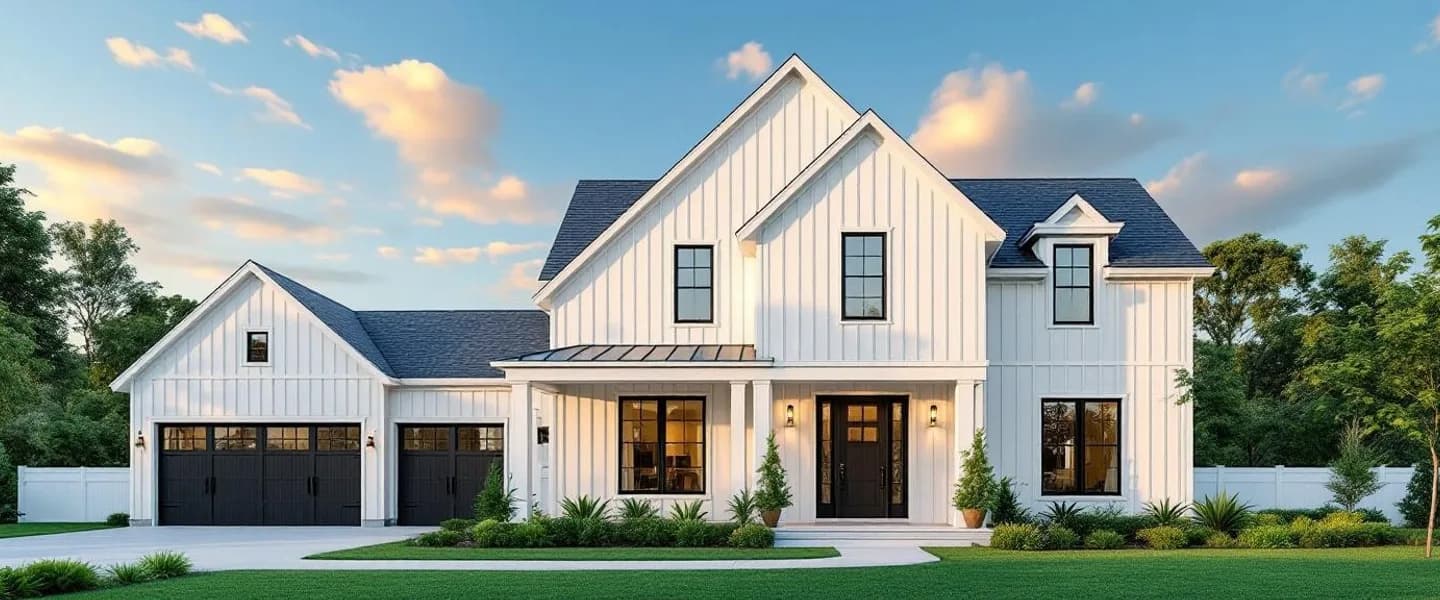
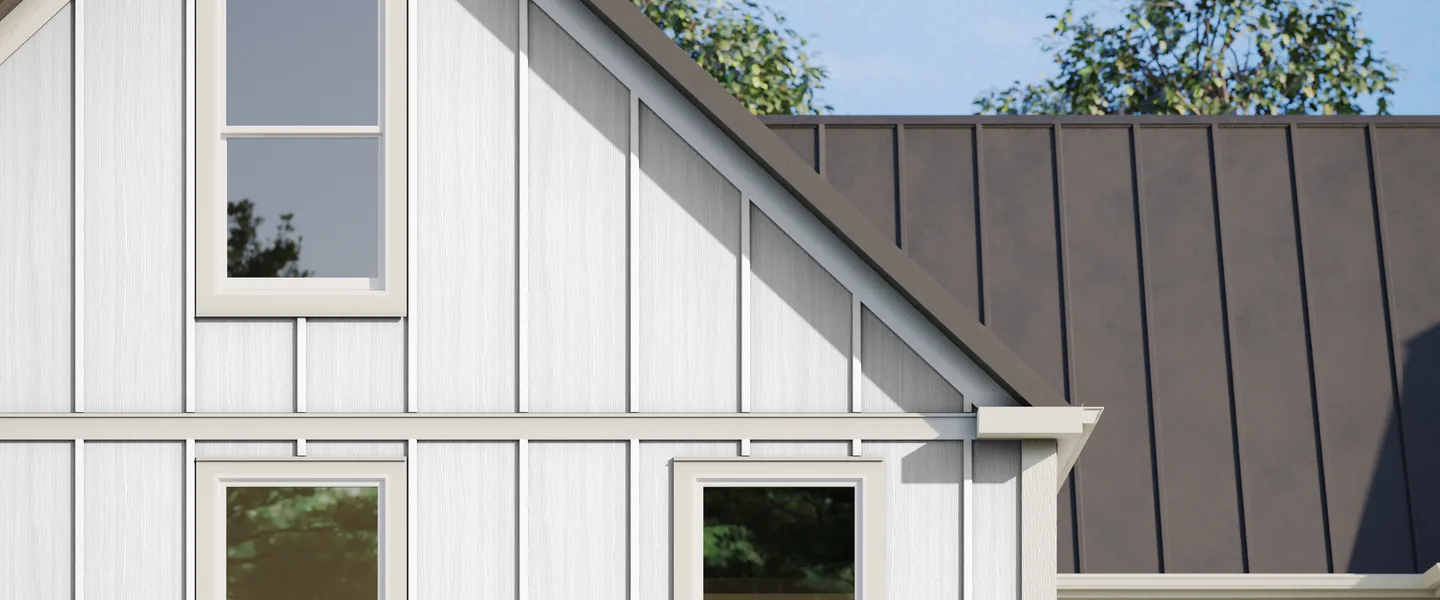

How Ontario Contractors Are Using Vertical Siding
The most common application is the accent wall: vertical panels across the front-facing gables and the entry bump-out of a new build, with horizontal vinyl on the side and rear elevations. The vertical lines pull the eye up and make a porch feel taller, and because the vertical field is a small share of the wall, it adds little to the material bill.
Full-facade board and batten is the modern farmhouse signature. Wrapping a dated two-storey in Kaycan Board & Batten Vertical in Sage, with black window trim, changes the whole character of the house. Vertical siding does this better than any other profile: it reads as deliberate and architectural in a way that horizontal lap never quite manages on a tall wall.
Mixed-material exteriors are where the look earns its keep on higher-end jobs. A common stack pairs board and batten on the upper storey with polymer cedar shake siding on the gable peaks and a stone or faux stone wall panel base course, with the vertical siding as the middle layer that ties the three textures together. What that stone base band adds per square foot is laid out in our stone veneer cost guide for Ontario.
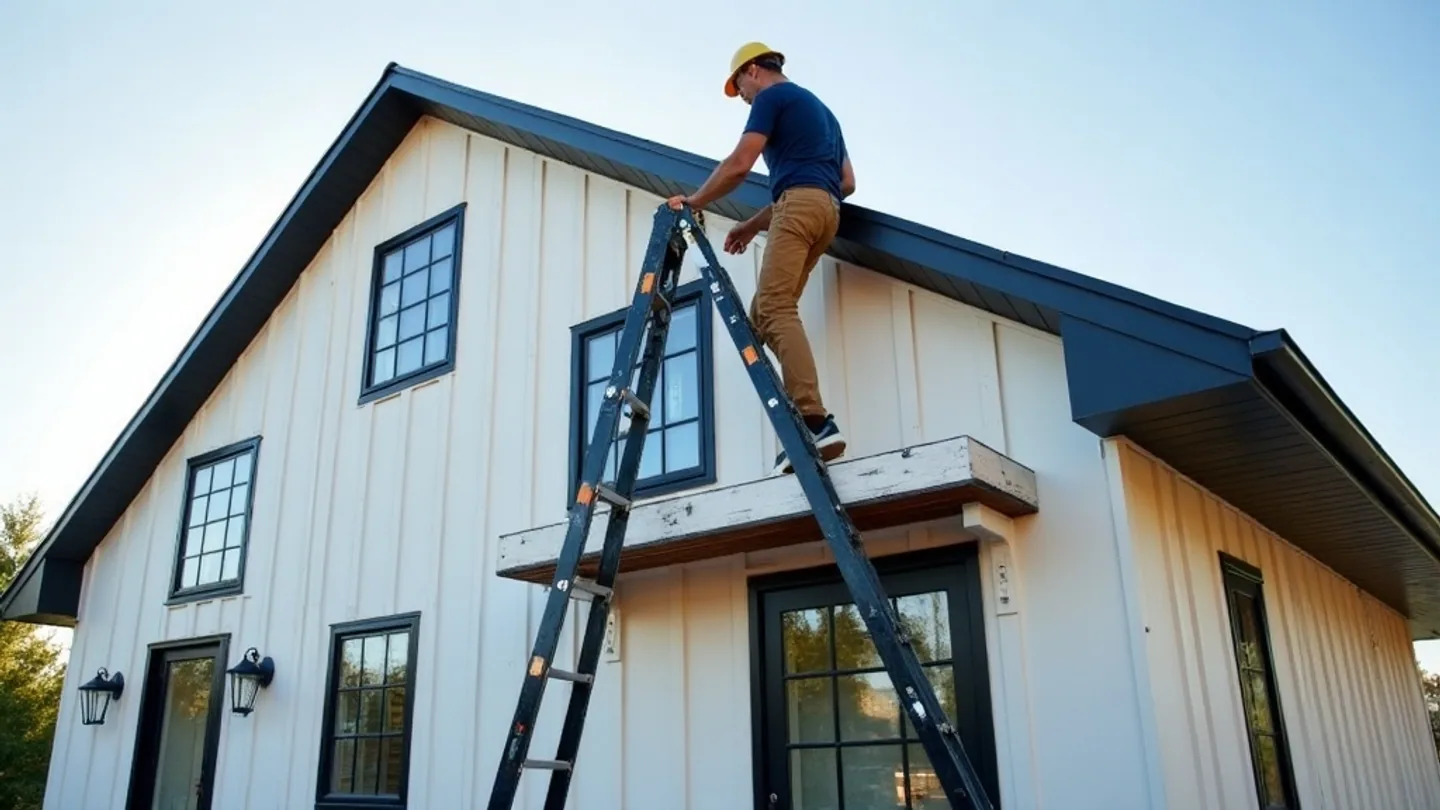 Vertical siding going up on a modern farmhouse new build in York Region, ON.
Vinyl, Engineered Wood, Fibre Cement or Steel: Which Board and Batten Material Is Best?
The material decision drives everything else: cost, lifespan, install speed, and how the finished wall reads from the curb. Here is how the four options we stock compare on the points that matter for an Ontario job.
| Spec | Vinyl (Kaycan) | Engineered Wood (CanExel) | Fibre Cement (James Hardie) | Steel (MAC Metal) |
|---|---|---|---|---|
| Installed cost (CAD/sq ft) | $5 to $8 | $8 to $13 | $12 to $18 | $12 to $18 |
| Board width | 7" exposure (D5: two 5" boards) | 12" board, 2 1/4" batten | 4 ft panel, 2 1/2" battens | 12" coverage |
| Thickness | 0.050" (Board & Batten Vertical) | 3/8" HDF | 5/16" panel, 3/4" batten | 26 gauge, 3/4" profile depth |
| Warranty | Limited lifetime | 25 yr limited, 15 yr finish | 30 yr substrate (panel), 15 yr ColorPlus finish | 40 yr limited |
| Finish | Through-colour vinyl, wash only | Factory finish | ColorPlus factory finish or primed | Pre-painted matte woodgrain |
| Best use | Volume, re-clad | Authentic farmhouse | Noncombustible walls, painted look | Premium modern builds |
Vinyl board and batten is the right call on the majority of jobs: it is the cheapest installed, never needs paint, and the better profiles carry a deep enough batten projection to read correctly from the street. Every vertical vinyl profile we stock is Kaycan: Board & Batten Vertical at 0.050 inch with a 7 inch exposure and a 1/2 inch profile depth, DaVinci in a flat or curved Intense face, and D5 Vertical with two 5 inch boards either side of a raised batten. For how Kaycan compares on horizontal lap, our Mitten vs Kaycan vinyl siding comparison covers gauge, colour, and warranty.
Engineered wood board and batten in our range is Maibec CanExel: a 12 inch, 3/8 inch HDF board with a separate 2 1/4 inch batten nailed over the joints at 16 inches on centre, factory finished and backed by a 15 year finish warranty. LP SmartSide, which we stock in lap and trim, arrives primed and has to be painted on site. Fibre cement board and batten comes from James Hardie: 4 foot wide Hardie Panel vertical siding with Hardie Trim Batten boards over the joints, both in the same 19 ColorPlus colours or primed; our James Hardie colours guide shows which of those colours the Hardie trim and soffit can match. Our fiber cement vs vinyl siding comparison prices what that means across 30 years of ownership.
MAC Metal Board and Batten is 26 gauge pre-painted steel with hidden fasteners and a 40 year limited warranty, and our metal siding guide covers why it shows up on architect-driven builds where the budget supports it.
One detail that catches crews out: batten projection. A cheap vinyl panel with a shallow batten looks flat and plasticky from across the street. The profiles worth speccing have a batten that stands proud enough to throw a real shadow line. That shadow is the difference between a vertical wall that looks built and one that looks printed on.
How Much Does Board and Batten Siding Cost in Ontario?
Board and batten siding costs $5 to $8 CAD per square foot installed in vinyl, $8 to $13 in engineered wood, and $12 to $18 in steel across the York Region and GTA market. Rural Ontario crews typically come in 10 to 15 percent lower on labour.
Those profile rates sit inside the broader siding cost table for Ontario, which prices every material we stock per square foot, per house and per year.
Material is only part of the number. Installed cost folds in labour, starter and finish trim, fasteners, and the corner and opening detailing that vertical siding demands. In the York Region and GTA market, vinyl board and batten siding lands at $5 to $8 CAD per square foot installed. Engineered wood runs $8 to $13. Steel from MAC Metal sits at $12 to $18 installed.
On a 1,800 sq ft re-clad, the swing from vinyl to steel is roughly $12,000 to $18,000 CAD in installed cost. That is a real conversation to have with a client up front, because the curb result from a well-installed vinyl wall is closer to steel than the price gap suggests. Spend the savings on better trim and a deeper-batten profile before you spend it on a different material. On an older wall that has gone wavy, pricing an insulated vinyl siding option is also worth it, since the foam backing flattens a substrate that crisp vertical lines would otherwise put on display.
The chart reflects mid-range installed pricing from contractor estimates in the York Region and GTA market. Rural Ontario crews typically run 10 to 15 percent lower on labour. Complex gable geometry, tall walls requiring extra staging, and high corner counts push every material toward the upper end of its range.
Installation Best Practices for Ontario Contractors
Vertical siding follows the same Polymeric Exterior Products Association (formerly the Vinyl Siding Institute) drainage-plane principles as horizontal, but the details that go wrong are different. These are the ones that cause callbacks on Ontario walls.
-
Furr out the wall first. Vertical vinyl needs horizontal nailing support: Kaycan calls for horizontal furring strips 12 inches on centre or solid nailable sheathing, and a smooth, flat surface for its Board and Batten panel. MAC steel board and batten goes over 5/8 inch plywood or level furring at 16 or 24 inches on centre. Hardie Panel needs wood strapping that leaves a drained and vented air space at least 10 mm deep, as CCMC Evaluation Report 12678-R requires. Skip this and the panels oil-can between fasteners.
-
Start dead plumb. A horizontal siding run can hide a small level error in the lap lines. Vertical siding cannot. The first panel sets the vertical reference for the whole wall, so shoot it with a laser and check it twice before you commit fasteners.
-
Respect the expansion gap. Vinyl moves along its length with temperature. Kaycan calls for 1/4 inch clearance at the top and 3/8 inch at the bottom, the first fastener at the top end of the uppermost nail slot so the panel hangs, every other fastener in the centre of its slot at 12 inches on centre, and 1/32 to 1/16 inch between nail head and panel. Never face-nail tight.
-
Flash the horizontal transitions. Anywhere a vertical siding field meets a band board, a change of material, or a window head, flash behind the panel above: Z-flashing on Hardie Panel, and back-to-back J-channel with flashing or a J-channel with a drip cap of at least 3/4 inch face on Kaycan vinyl. Vertical siding channels water straight down, so a missed transition dumps it behind the wall. What has to catch it there is the barrier, which our house wrap guide for Ontario walls sets out lap by lap.
-
Use corrosion-resistant fasteners. Road salt spray in the GTA and Simcoe County reaches further than crews expect. Galvanized is the minimum; stainless is worth it within a few blocks of a heavily salted arterial, and James Hardie recommends stainless finish nails on its battens. Section 9.27 of the Ontario Building Code, O. Reg. 163/24, relies on a second plane of protection behind the cladding rather than a sealed face, so let the wall drain and never caulk the panel laps shut.
Why Ontario's Climate Rewards Vertical Siding
Ontario's freeze-thaw cycle is the defining performance test for any exterior cladding. Environment Canada climate normals show southern Ontario sites swinging from below -20°C in January to above 30°C in July, with dozens of freeze-thaw transitions through spring and fall. Water that sits on a wall and freezes is what destroys cladding over time.
Vertical siding has a quiet advantage here. The panels channel snowmelt and rain straight down and off the wall, so water spends less time pooling at joints than it does on the stepped lap lines of horizontal siding. On a wall in a wet, shaded spot, that faster shedding is one less thing working against it every March.
Vinyl and steel board and batten do not absorb moisture, so freeze-thaw cycling has nothing to act on. Kaycan builds its vertical vinyl with Duratron vinyl technology for Canadian weathering. The one nuance worth knowing: dark colours on a south-facing wall absorb more solar heat and move more, so on dark vertical installs keep the full top and bottom clearances, and in vinyl pick a profile built for it. The DaVinci Intense colours use Kaycan's Helios technology to resist sun-induced heat distortion.
Choosing Colours and Pairings for Board and Batten
Colour reads differently on vertical siding than it does on horizontal lap. The batten lines create a regular rhythm of shadow up the wall, and that shadow deepens whatever colour sits behind it. The same grey that looks flat on a clapboard panel looks a full shade richer once the battens start throwing shadow lines across it. Spec with that in mind and you will hit the curb result the client pictured. For the shades leading exteriors this year, our 2026 vinyl siding colours guide breaks down the full palette and how each one reads on an Ontario wall.
Whites and soft neutrals (heritage white, linen, sandstone) are the modern farmhouse default for a reason. White board and batten with black window trim is the single most-requested combination we see from contractors in York Region, and it photographs beautifully on a real estate listing. The batten shadows give a white wall the texture it needs so it never reads as a blank box. Our exterior house colours guide builds that look part by part, with black fascia, eavestroughs and trim from stock.
Mid-tone greens and greys (sage, fern, pewter, slate) suit board and batten well. A sage facade with white trim and a cedar-tone front door is a classic pairing, and earthy mid-tones sit comfortably in established neighbourhoods and date far more slowly than a trend colour will.
Dark colours (iron grey, black, deep navy) are the architect's choice on modern builds, and the vertical format carries them well because the batten shadows keep a dark wall from going flat. Two cautions apply. Dark walls on a south or west exposure absorb solar heat and move more at the joints, so allow the full thermal gap. In steel, MAC Board and Batten comes in White Oak, Cork and Titanium Black, with several plank variations of each colour in the box so a dark wall does not repeat one pattern.
Two-tone and mixed-material exteriors are where vertical siding earns its design value. The strongest combinations we supply pair a board and batten field with a contrasting horizontal band, a stone base course, or a shake-textured gable. Running the vertical panels on the prominent front elevation and a budget-friendly horizontal profile on the side and rear walls is also the standard way to get the architectural look without cladding the whole house in the premium product. That single move keeps the material cost in check while putting the design where the street actually sees it.
Sourcing Board and Batten Siding in Ontario
At Pro Materials, we stock the vinyl, engineered wood, fibre cement and steel board and batten in this guide at our Newmarket warehouse, and we confirm stock and lead time on each colour when you ask for a quote. We supply contractors across York Region, the GTA, and Simcoe County, and north to Barrie; the Toronto page covers the short orders that laneway and addition work needs. For a full-facade job, request a quote online or call us and we will confirm lead times and volume pricing on the first call.
The fastest way to lock in a colour with a homeowner is to get the two or three board and batten profiles that fit the architecture in front of them as samples. Batten depth and colour both read differently on a real wall than in a catalogue, and seeing the shadow line in person ends the back-and-forth fast. We also keep the manufacturer spec sheets on file if you need product documentation for a project specification package.
NEWMARKET SHOWROOM Unit 5, 1235 Journey's End Cir, Newmarket, ON L3Y 8T7
Phone: +1 (905) 836-7272 Email: info@promaterials.ca
Pair Board and Batten With These Profiles and Trims


Ryan Callaway
Vinyl Siding & Cladding Specialist
Ryan has spent 12 years specifying and supplying vinyl siding across York Region and the GTA. He knows every Mitten and Kaycan profile by texture and holds Kaycan's certified product specialist designation.
Share this article