
Vinyl Siding in Ontario: The Complete Contractor's Guide for 2026
Key points
- Vinyl siding covers most Ontario walls for a reason: 6 to 9 CAD per square foot installed, no repainting, and nothing for freeze-thaw to act on
- Gauge decides how a wall looks in ten years. A heavy 0.048 to 0.050 inch panel stays flat; a thin 0.040 inch panel waves and reads cheap from the street
- The panel is one layer of five. Sheathing, weather-resistive barrier, insulation, siding, and trim together decide how the wall performs, not the siding alone
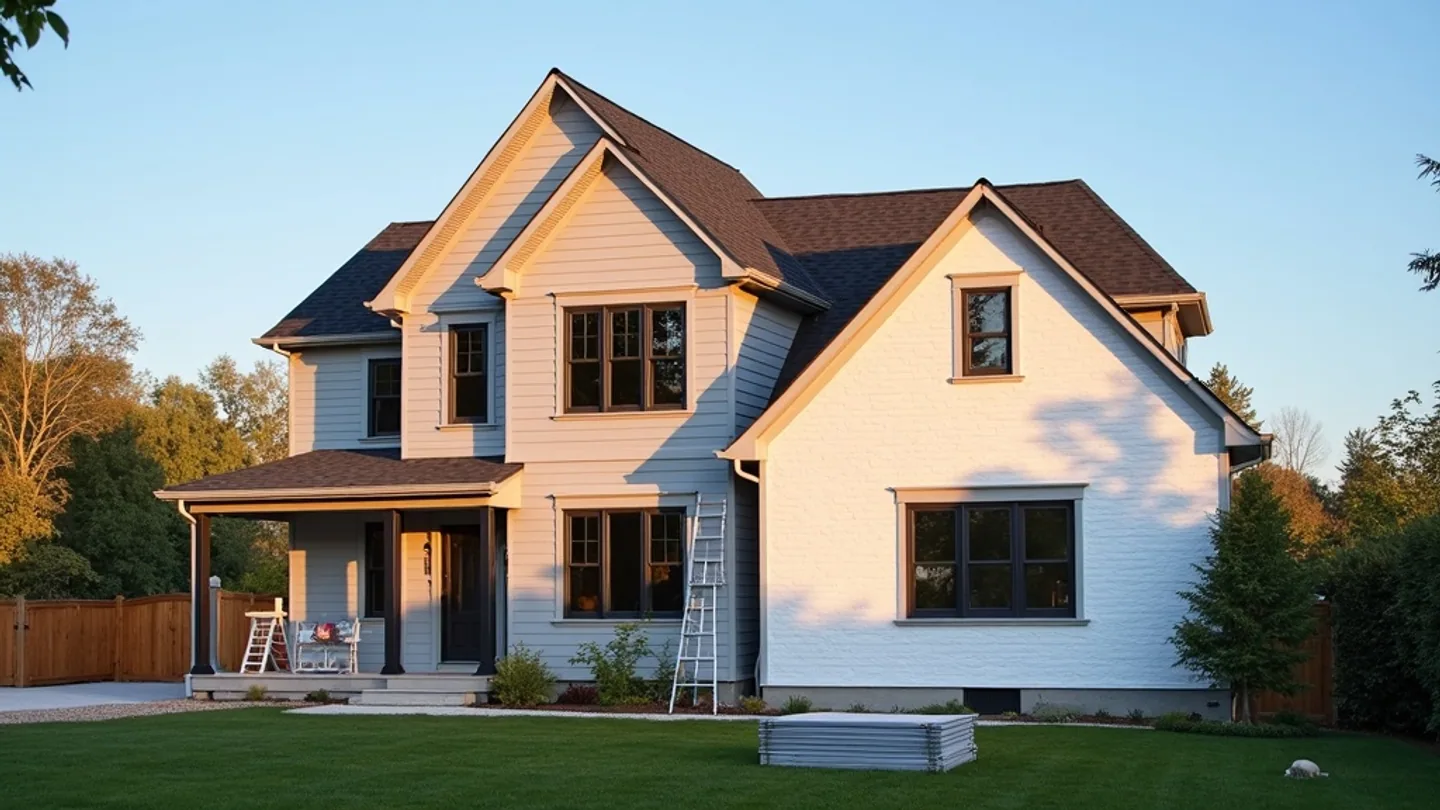
Every re-clad in York Region eventually comes down to a panel on a wall, and on most Ontario job sites that panel is vinyl siding. It is the default cladding on suburban streets from Newmarket to Vaughan for reasons that have nothing to do with fashion: it is the lowest installed cost that still looks like painted wood, it never needs a coat of paint, and there is nothing in a freeze-thaw cycle for it to absorb. A contractor pricing a 1970s bungalow re-clad in Aurora is not choosing between vinyl and something exotic. The real decision is which vinyl, at what gauge, in what profile, over what wall.
That is the decision this guide is built to settle. Most vinyl content stops at a colour chip, so this one starts at the sheathing and works out, layer by layer, then covers profile, gauge, colour, cost, and install the way a contractor actually meets them on the job. Where a topic runs deep enough for its own guide, like the Mitten vs Kaycan brand comparison, the complete Kaycan siding range, or the full set of vinyl siding guides, this page points you there instead of repeating it.
What Is Vinyl Siding, and Why Does It Still Lead Ontario Walls?
Vinyl siding is a rigid PVC cladding panel that hangs loosely on the wall as a rain screen, locking course over course so it can expand and contract freely. It leads the Ontario market because it is the cheapest cladding that reads as painted wood from the street, carries colour through the panel so it never needs repainting, and does not absorb water, which makes freeze-thaw a non-event.
The material itself is polyvinyl chloride with pigment and stabilisers run through the full thickness of the panel, not painted on the surface. That single fact is why a scratch on vinyl does not show a different colour underneath and why the wall never needs a repaint the way wood or fibre cement eventually does. The Polymeric Exterior Products Association (formerly the Vinyl Siding Institute) treats the panel as one part of a drainage assembly rather than a sealed skin, which is the mental model that makes everything else on this page make sense: the siding sheds the bulk of the water, and the layer behind it drains whatever gets past.
Vinyl earned its lead by outlasting the materials it replaced. Aluminium siding, the default on Ontario homes into the 1980s, dented on contact and chalked as its paint broke down, and cedar demanded scraping and repainting every five to seven years in this climate. Vinyl siding removed both problems at a lower installed cost, and the modern panel has closed most of the appearance gap that once gave wood the edge. A low-gloss cedar-grain emboss on a heavy-gauge panel reads as painted wood from the sidewalk, which is all most streetscapes ask of it.
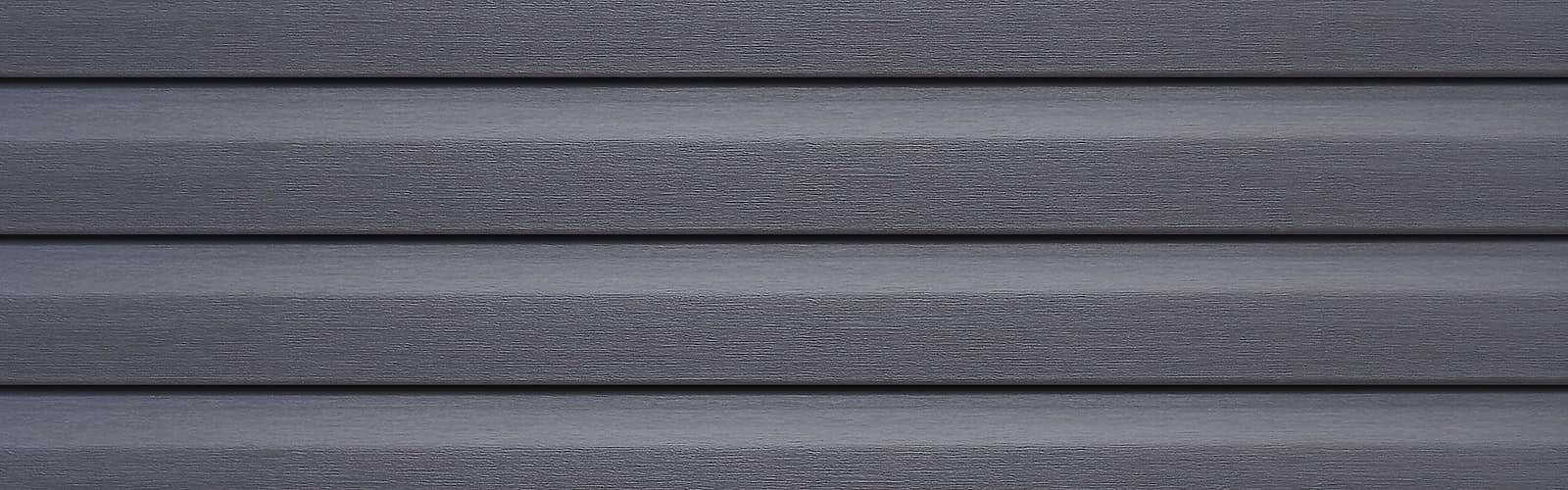
At Pro Materials, we stock vinyl siding from both Canadian-made leaders because it still wins the value math on the vast majority of Ontario walls. A homeowner in Bradford comparing a vinyl re-clad against fibre cement or engineered wood is usually looking at roughly half the installed cost, no repainting cycle, and a lifetime warranty. That is a hard combination to argue with, and it is why the panel keeps its lead even as newer materials get the design-magazine coverage. The lines below are the horizontal lap products we move most out of Newmarket.
Horizontal Vinyl Siding Lines We Stock in Newmarket



The Vinyl Siding Wall, Layer by Layer
A wall clad in vinyl siding is five layers, not one, and the panel is the layer that gets all the attention and does the least structural work. Understanding the stack is what separates a wall that performs from one that just looks finished on handover day. From the studs outward, the assembly runs sheathing, weather-resistive barrier, an optional insulation layer, the siding itself, and the trim package that closes every edge.
The barrier behind the siding is the layer contractors skip at their peril. Vinyl siding is a rain screen, which means it deliberately lets a little water past at the laps and vents it out the bottom; the weather-resistive barrier is what actually keeps the wall dry, and which barrier you spec is decided by its perm rating, as the house wrap guide for Ontario walls sets out. On a re-clad near Keswick last year, we watched a crew strip 30-year-old vinyl to find bone-dry sheathing under intact building paper, which is exactly how the system is supposed to age. Skip or tear that layer and the same wall rots quietly behind a panel that still looks fine.
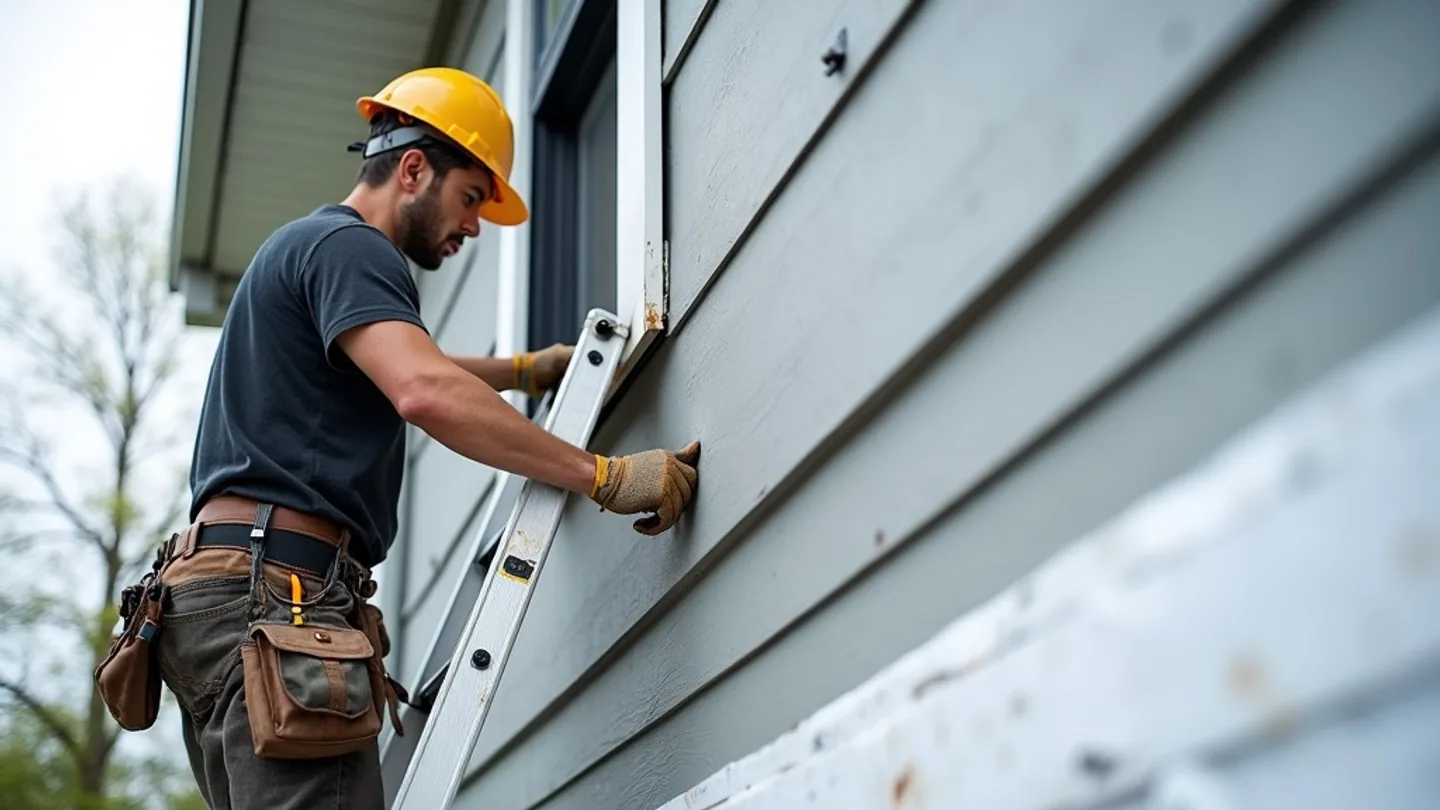 The panel is the last of five layers. House wrap and flashing behind it do the real weather work.
Window and door openings are where a vinyl wall is won or lost, because they are where water most wants in. The barrier has to be lapped and taped so it sheds onto the layer below, and the flashing at the head of each opening has to tuck behind the wrap and over the trim, never the reverse. We supply flashing tape and self-adhered membrane alongside the siding for exactly this reason: a flawless panel over a reversed head flashing still leaks. On a leaky-window callback in Newmarket, the vinyl was perfect and the head flashing was lapped the wrong way, which sent every rain straight into the wall.
The insulation layer is optional but decides how the finished wall reads and performs. A thin panel run straight over uneven old sheathing telegraphs every dip and wave, which is why a foam-backed or continuous-insulation build-up is worth pricing on any wall that has moved. It also lifts the whole assembly's thermal number, and the gap between a bare panel and an insulated build-up is not small. The chart below shows the effective R-value each cladding option adds, drawn from Natural Resources Canada and manufacturer data.
That thermal story is why the insulated vinyl siding option earns its place on any wall with a comfort or energy brief, and it deserves its own guide because the foam-backing math changes the whole quote. The last layer, the trim and roofline package, is covered in our soffit and fascia guide, since a vinyl wall is only as clean as the J-channel, corners, soffit, and fascia that frame it, and the soffit panel sizing and cost guide turns that eave into a carton count and a per foot rate. Where that package is cellular PVC rather than vinyl, our PVC trim guide sets out the expansion gap it has to be installed to. The table below is the whole assembly in one view.
| Layer | Role in the wall | What we stock | Why it matters |
|---|---|---|---|
| Sheathing | Structural substrate | Supplied by the builder | Flat sheathing keeps the vinyl flat |
| Weather-resistive barrier | Drains and dries the wall | Tyvek HomeWrap, HomeGuard house wrap | The real weather layer behind the rain screen |
| Insulation (optional) | Continuous R-value, flattens the wall | Airboard AERO, Levelwall, foam-backed panels | Lifts thermal performance, hides a wavy substrate |
| Vinyl siding panel | Rain screen and finished look | Mitten and Kaycan horizontal, vertical, shake | Sheds bulk water, carries the colour and profile |
| Trim and accessories | Closes every edge cleanly | J-channel, corners, soffit, fascia, PVC trim | Turns a clad wall into a finished one |
Vinyl Siding Profiles: Lap, Vertical, and Shake
Profile is the shape the panel throws on the wall, and it drives the look far more than the colour does. Horizontal lap is the default across Ontario, and it comes in reveal heights measured by the exposure you see between courses: double 4 inch, double 4.5 inch, and double 5 inch are the common ones, with triple 3 inch for a tighter traditional line and a single 6 inch bevel for the deepest, most authentic shadow. A steeper, deeper profile reads as a more custom, higher-end wall, which is why a heritage re-clad in older Toronto neighbourhoods often calls for the 6 inch bevel while a builder-grade subdivision runs double 5.
Matching an existing reveal is the profile call that trips up re-clads. Strip a 1990s wall and you often find a double 4.5 inch exposure that a plain double 5 will not line up with around windows and against trim, leaving a mismatched band that reads as a repair. Kaycan's Timberlake line carries eight profiles partly to solve this, giving a crew the reveal height to match almost any wall without switching brands. We keep the common exposures on the rack in Newmarket so a contractor can match the old line instead of fighting it.
Vertical vinyl siding is the profile winning the most new-build and modern-farmhouse work right now. Board and batten in particular has moved from accent to whole elevations across King Township and Bradford builds, and it earns its own detail in our board and batten siding guide. Shake and shingle profiles round out the range, giving a gable or a full elevation the look of hand-split cedar without the maintenance. The table maps the profile families to the jobs they suit.
| Profile family | Common reveals | Reads as | Typical Ontario job |
|---|---|---|---|
| Horizontal lap | Double 4, 4.5, 5 inch | Clean classic siding | Most re-clads and builder work |
| Dutch lap | Double 4, 4.5 inch | Softer traditional shadow | Century-home and heritage looks |
| Bevel | Single 6 inch | Deep custom shadow line | Higher-end and heritage re-clads |
| Board and batten (vertical) | 7 inch on centre | Modern farmhouse, contemporary | New builds, gables, feature walls |
| Shake and shingle | Staggered | Hand-split cedar | Gables, accents, cottage exteriors |
Colour is the other half of the look, and it is deep enough that it lives in its own 2026 vinyl siding colours guide rather than a paragraph here. The short version for speccing: darker, saturated shades keep winning Ontario elevations, and the panel formulation now handles them without the heat distortion that used to rule dark vinyl out. Once the siding colour is chosen, our exterior house colours guide works out the trim, soffit, fascia and eavestroughs around it.
What Makes One Vinyl Siding Panel Better Than Another?
The three numbers that separate a good vinyl siding panel from a cheap one are gauge, wind rating, and colour depth. Gauge, measured in thousandths of an inch, decides whether the wall stays flat or waves within a few summers. Wind rating decides where you can safely hang it. Colour depth and fade coverage decide how the wall looks a decade in. Brand matters less than these three.
Gauge is the number to lead with, because it is the one a homeowner never sees on the quote and always sees on the finished wall. A thin 0.040 inch builder panel flexes and oil-cans in July heat and reads cheap from the curb; a heavy 0.048 to 0.050 inch panel holds flat and keeps its shadow line. We run the value-priced lines on sheltered rear elevations and reserve the heavy gauge for the wind-facing front of the same house, which is the kind of call the brand-by-brand comparison gets into for Mitten and Kaycan specifically. The table lines up the horizontal lines we stock by nominal gauge.
| Vinyl line | Brand | Nominal gauge | Tier |
|---|---|---|---|
| Oregon Pride 40 | Mitten | 0.040 inch | Value |
| Highland 42 | Mitten | 0.040 to 0.042 inch | Mid |
| Hardwood Valley II | Kaycan | 0.044 inch | Mid |
| Sentry 44 | Mitten | 0.044 to 0.050 inch | Premium |
| West Ridge | Mitten | 0.046 inch, foam-backed | Luxury |
| Prova | Kaycan | 0.048 inch | Premium |
| Richmond | Kaycan | 0.050 inch heavy gauge | Premium |
Colour depth is the second lever, and it is where the brands genuinely split. A wider palette keeps a job off a slow special order when you are matching an existing wall or meeting a subdivision colour rule. Mitten's Sentry 44 line carries 38 colours, the single widest vinyl palette we stock in Newmarket, while Kaycan concentrates on an edited core of neutrals and greys. The chart below ranks the lines we carry by how many colours each one offers.
Wind rating is the third number, and it is the one that keeps a wall on the house. Mitten's Sentry 44 is tested to a 180 mph wind rating, among the highest on residential vinyl, which makes it a safe spec on the open rural lots of Simcoe County. Kaycan answers with construction rather than a headline figure, using an exclusive double-thick nail hem on the Richmond line that grips the fastener through a gust. On a genuinely exposed or lake-adjacent wall, a foam-backed panel adds a stiffness that bare vinyl of any gauge cannot match.
Fade coverage is the fourth number worth reading on the warranty, because a wall that holds its colour is what the homeowner notices at year ten. Both brands we stock run pigment through the full panel and back it with a stated guarantee rather than a vague clause. Kaycan pairs its Richmond and Verona lines with a dedicated 25-year fade-resistance guarantee and Chromalock colour-lock technology, and its Helios formulation carries the deep architect-selected darks that used to distort in the sun. Mitten answers with a measurable Fade Promise of Delta E of 1 or less over five years on its Sentry Rustic palette, a hard number instead of a soft one.
How Much Does Vinyl Siding Cost in Ontario?
Standard vinyl siding runs roughly 6 to 9 CAD per square foot installed across York Region and the GTA in 2026, with insulated vinyl at 9 to 12 CAD per square foot. That places vinyl as the clear value leader against fibre cement at 12 to 18 CAD and steel at 12 to 18 CAD installed. On a typical 1,800 square foot re-clad, expect 12,000 to 20,000 CAD all in, with labour and trim, not the panel, driving most of the number.
For the cross material picture, our siding cost pillar for Ontario sets these vinyl bands against all eight materials we stock and rebuilds a real invoice from the quoted rate.
The panel is the small line on the invoice. Labour usually runs 35 to 50 percent of the installed cost, and the extras stack up fast: scaffolding on a two or three storey wall adds 15 to 25 percent to labour, and stripping old cladding can add several thousand dollars before the first new panel goes on. Rural Ontario crews generally run 10 to 15 percent under GTA labour rates, so the same house costs less to clad in Barrie than in Vaughan. The chart below puts vinyl's installed cost in context against the materials it competes with.
The cost drivers a homeowner never thinks of are the ones that move a real quote. Every outside corner, window return, and gable adds cut panels, trim, and labour, so a simple rectangular bungalow clads for less per square foot than a two-storey with six gables and a wraparound porch of the same wall area. Removing old cladding, re-sheathing a soft spot, and wrapping a bank of windows all land as line items before the first new panel goes up. This is why a square-foot number is only ever a starting point, and why we quote off the actual elevations rather than a rule of thumb. The same trap catches deck work, where our aluminum and glass railing cost guide shows the per linear foot figure breaking down over post count and stair returns.
Two things move a vinyl quote more than the brand does: gauge and profile. A 0.040 inch builder panel and a 0.050 inch heavy-gauge line from the same maker can sit two dollars apart per square foot once labour and trim are folded in, and a deep 6 inch bevel costs more to buy and hang than a plain double 5. If the wall has already gone wavy, the insulated vinyl option is worth pricing, since the foam flattens a substrate that thin vinyl would otherwise put on display. For a full cross-material picture, the honest comparison against steel is in our metal siding guide. The table below sizes the job by house.
| House size (wall area) | Standard vinyl installed | Insulated vinyl installed |
|---|---|---|
| Small (1,200 sq ft) | 8,000 to 11,000 CAD | 11,000 to 15,000 CAD |
| Typical (1,800 sq ft) | 12,000 to 16,000 CAD | 16,000 to 22,000 CAD |
| Large (2,500 sq ft) | 16,000 to 23,000 CAD | 22,000 to 30,000 CAD |
Vinyl Siding vs Other Cladding: Where It Wins and Where It Doesn't
Vinyl siding wins on installed cost, zero repainting, and freeze-thaw resilience, which is why it leads Ontario walls. It gives ground to fibre cement and steel on fire resistance and dead-flat rigidity, and to real cedar on organic texture. For most residential re-clads, the value math still lands on vinyl, which is why it stays the default.
Every cladding earns a place on some wall, and a supplier worth trusting tells you where vinyl is not the answer. Fibre cement and steel both beat vinyl on fire, since vinyl is combustible and softens near sustained heat, which matters on a zero-lot-line infill in dense Toronto where the metal siding option can be the safer call. Engineered wood throws a deeper, more dimensional shadow than most vinyl profiles for a client who wants the look of real board siding at a mid-tier price, and our LP SmartSide and engineered wood siding guide prices that route and reads its warranties. Natural cedar still owns the organic, silvering texture that no polymer fully copies. A stone skirt under a vinyl gable is the most common mixed elevation we quote, and the panel that goes below the sill fastens like siding while answering to a different code report, which our Versetta Stone and Novik stone panel comparison works through.
Where vinyl wins is the exact combination most Ontario homeowners actually want: the lowest installed cost, no scraping or repainting cycle, and a material that shrugs off the freeze-thaw swing. A builder in Bradford pricing a spec home against fibre cement is usually looking at close to double the cladding cost and a repaint due in 15 to 20 years, set against a vinyl wall that asks for a garden-hose rinse and nothing else. Our fiber cement vs vinyl siding cost comparison models that gap across 30 years of ownership. The table sets the honest trade-offs side by side.
| Material | Installed (CAD/sq ft) | Repaint cycle | Fire | Best for |
|---|---|---|---|---|
| Vinyl siding | 6 to 9 | Never | Combustible | Most residential re-clads, best value |
| Insulated vinyl | 9 to 12 | Never | Combustible | Comfort, energy, wavy old walls |
| Engineered wood | 9 to 14 | 10 to 15 yr | Combustible | Deep texture at a mid price |
| Fibre cement | 12 to 18 | 15 to 20 yr | Non-combustible | Fire exposure, premium look |
| Steel and metal | 12 to 18 | Never, 40 yr finish | Non-combustible | Modern lines, fire, exposed walls |
The working rule for a contractor: lead with vinyl siding on the body of most houses, and reach for steel or fibre cement where fire code, a specific architectural line, or a premium budget calls for it. Some of the best Ontario elevations mix them, running a vinyl field with a steel or stone accent to hold the budget while keeping the premium look where the street sees it. Choosing the material is the first fork. Everything below is what follows once vinyl is the answer.
Installing Vinyl Siding in the Ontario Climate
Ontario's temperature swing is the real test of a vinyl install, and it is why the one rule that matters most is to let the panel move. A wall runs from a minus 20 Celsius January morning to a 30 Celsius July afternoon, and a 12 foot panel changes length measurably across that range. Nail into the centre of the slot, never pin the panel tight, and hold the expansion gap at every J-channel and corner post. Buckled vinyl on an Ontario wall is almost always an install error, not a product failure, and it traces back to a fastener driven home or a gap left short.
The freeze-thaw resilience contractors count on comes from how the assembly handles water, not from the vinyl alone. Because the panel hangs as a vented rain screen, any moisture that gets past the laps drains down the weather-resistive barrier and weeps out at the bottom course, so there is no trapped water to freeze, expand, and split a wall over a Simcoe County winter. Aluminium and wood both hold water in ways that punish a freeze-thaw cycle; vinyl does not absorb it, and the assembly is built to drain what slips through. That is the quiet reason vinyl siding has aged so well on Ontario walls for 40 years.
Build the wall in the right order and the climate takes care of itself. The sequence below is the one our contractors follow, and it mirrors the layer-by-layer logic of the whole guide. Speccing dark colours changes only the discipline, not the steps: a charcoal or black wall on a south or west exposure expands more, so set fasteners at the cool end of the slot and respect the full gap under the Ontario Building Code cladding provisions.
-
Dry in the wall first. Cover the sheathing with a weather-resistive barrier and flash every window and door before a panel goes up. The barrier drains the wall; the siding is the rain screen over it.
-
Add the insulation layer if it is specced. Install rigid foam or a foam-backed build-up over the barrier. This is also the moment to flatten a wavy old wall so the vinyl does not telegraph every dip.
-
Set the starter strip dead level and install the corner posts. Snap a level line, fasten the starter to it, and set the corners plumb. Every course above inherits this line, so a starter off by a quarter inch shows at the roofline.
-
Run the panels loose and leave the expansion gap. Lock each course into the one below, nail the centre of the slot, and hold a 6 mm gap into J-channel and corners so the wall can move.
-
Finish with J-channel, trim, soffit and fascia. Close the openings and finish the roofline with colour-matched soffit and fascia. The trim package is what turns a clad wall into a finished one.
Common Vinyl Siding Mistakes That Cause Callbacks
Most vinyl callbacks trace to a short list of install errors, and every one of them is preventable. After enough re-clads the same failures repeat: a wall that buckles in July, a panel that unzips in a November windstorm, a waterline staining the sheathing behind a wall that looks fine from the street. None of them are the panel's fault. Each is the difference between a crew that respects how vinyl moves and one that hangs it like a board of wood.
-
Nailing tight. Driving the fastener home pins the panel, and it buckles on the first hot afternoon. Leave roughly 1 mm of play under the head so the panel can slide.
-
Face-nailing. A nail through the face of the panel instead of the nail hem locks it and cracks it in the cold. Every fastener belongs in the centre of the slot in the hem.
-
No expansion gap. Butting a panel tight into a J-channel leaves it nowhere to grow. Hold a 6 mm gap, and a little more on a cold-weather install when the panel is already contracted.
-
A starter strip that is not level. The whole wall inherits that first line, so a starter out by a quarter inch throws every course off by the time you reach the roofline.
-
Reversed flashing laps. Head flashing run over the house wrap instead of behind it funnels water straight into the wall, the exact failure behind the Newmarket callback earlier in this guide.
-
Too few fasteners. Manufacturers spec a fastener spacing, usually every 16 inches. Skipping them to save time invites wind lift on any exposed elevation.
A contractor re-cladding a two-storey in Vaughan last summer inherited a wall the previous crew had face-nailed straight through the panels, and every course had split over one winter. The fix was a full strip and re-hang on the homeowner's patience, not the manufacturer's warranty, because an install error is not a product defect. Getting the fundamentals right the first time is always cheaper than the callback that follows a shortcut.
How Do You Maintain and Clean Vinyl Siding?
Vinyl siding needs almost no maintenance beyond a yearly rinse. Wash it once a season with a soft-bristle brush and a mild mix of water and dish soap, or a 30 percent white vinegar solution for the green film that grows on a shaded wall, working bottom to top and rinsing top to bottom. Skip the high-pressure washer, which drives water behind the panels.
The maintenance case is most of why vinyl siding leads Ontario walls in the first place. There is no scraping, no priming, and no repainting cycle, because the colour runs through the panel instead of sitting on the surface. A garden hose and a soft car-wash brush on a long handle reach a second storey from the ground, and one pass a year keeps a wall looking new. For the green algae film that grows on a north wall through a damp Simcoe County spring, the vinegar solution clears it without bleaching the trim or the plants below.
A few things do damage vinyl, and they are worth naming to a client. A pressure washer held close or aimed upward forces water past the laps and behind the panels, the opposite of what the rain screen is built to do. A barbecue or a patio heater set too close can soften and warp a panel, since vinyl distorts under sustained heat well below the point that bothers steel or fibre cement. Painting is a last resort: it can be done with vinyl-safe paint, but a dark colour over a light panel absorbs more heat than the panel was engineered for and can void the warranty.
Across a 30 to 40 year lifespan, most walls never ask for more than the annual rinse. Snow and ice do not harm vinyl, and a wall sheds them as it warms, though a heavy icicle load off a blocked eavestrough is worth clearing before it drags on the trim.
Does Vinyl Siding Add Value to a Home?
New vinyl siding is one of the most reliable exterior upgrades for resale. It recovers a high share of its cost and lifts curb appeal on the first impression, because a clean re-clad in a current colour reads as a maintained home to a buyer. Most of that value shows up in the listing photos and the drive-by that set the asking price.
Curb appeal is the quiet return on a re-clad, and it lands before a buyer ever walks through the door. A tired 1980s wall in a faded colour tells a buyer the house has been neglected; a fresh vinyl wall in a current charcoal or warm white tells them it has been kept up. Exterior replacement projects consistently rank among the stronger cost-recovery renovations in national remodelling data, and vinyl siding sits near the top of that group because it delivers the biggest visual change for the lowest cost.
For a contractor, this is a point worth naming to a client on the fence. A homeowner in Aurora planning to list in two years gets more from a vinyl re-clad than from most interior updates of the same budget, since the exterior is what sets the asking price in the photos and the first drive-by. Pairing the re-clad with colour-matched soffit and fascia and trim compounds the effect, because a buyer reads the whole envelope as one maintained system rather than a patched wall.
What to Order: Accessories and Quantities for a Vinyl Siding Job
The panel is only about two-thirds of a vinyl siding order. The rest is the accessory package that makes the wall watertight and finished, and forgetting one piece of it is what sends a crew back to the counter in the middle of a job. On a mobile home or a cottage on piers there is a sixth item below all of it, and it is counted differently again: see the vinyl skirting sizing and venting guide. A complete order covers the field panels, the starter strip, every piece of trim that frames an edge, and the fasteners rated for the exposure.
-
Starter strip along the bottom of every wall, set dead level.
-
Outside and inside corner posts to close the corners cleanly.
-
J-channel around every window, door, and roofline transition.
-
Utility (finish) trim at the top course and under the sills.
-
Undersill and mounting blocks for lights, taps, dryer vents, and fixtures.
-
Colour-matched fasteners, soffit, fascia, and trim coil to finish the eave and roofline.
Vinyl siding is sold by the square, where one square covers 100 square feet of wall. Measure the wall area, subtract the large openings, and add a waste factor: 10 percent on a simple rectangular house and 15 percent on a cut-heavy elevation with several gables, dormers, and window returns. An 1,800 square foot wall of average complexity works out to roughly 20 squares plus its trim. At Pro Materials, we take the quantities off your elevations so the whole package, panels, corners, J-channel, and fasteners, lands on one order and one delivery. Stock colours ship the same day from Newmarket, and a special-order shade or a discontinued-profile match usually arrives within a few days, so it pays to confirm colour and quantity before the crew is on site.
Where to Buy Vinyl Siding in Ontario
At Pro Materials, our Newmarket warehouse carries both Mitten and Kaycan vinyl siding, with the colour-matched soffit, fascia, and trim to finish either brand cleanly, and the house wrap and insulation that go behind them. We supply contractors across York Region, the GTA, and Simcoe County and north to Barrie, with pickup in Newmarket and same-day availability on most stock colours and next-day on special orders. Because we stock the whole wall and not just the panel, a contractor can pull the siding, the barrier, the trim, and the fasteners for a job off one counter in one trip.
The fastest way to settle a spec is a real sample in daylight, not a chip on a screen. Gauge, profile depth, and colour all read differently on a wall than in a catalogue, and putting a heavy Kaycan Richmond bevel next to a Mitten Sentry lap usually decides a job in a minute. Request a quote online or call us, and we will confirm colour and profile availability, lead times, and volume pricing on the first call.
NEWMARKET SHOWROOM Unit 5, 1235 Journey's End Cir, Newmarket, ON L3Y 8T7
Phone: +1 (905) 836-7272 Email: info@promaterials.ca
More Vinyl Siding Lines and Profiles at Pro Materials



Ryan Callaway
Vinyl Siding & Cladding Specialist
Ryan has spent 12 years specifying and supplying vinyl siding across York Region and the GTA. He knows every Mitten and Kaycan profile by texture and holds Kaycan's certified product specialist designation.
Share this article